Horse Property Loans in Temecula: How Financing Works in 2026
Best of intentions, no local Temecula experience. The buyer stood on the front porch of the 5-acre Wine Country listing, clutching the pre-approval letter like a winning lottery ticket. It showed $1.4M, conventional, 20% down, signed by a friendly loan officer in a branch that had clearly never done a horse-property loan in Temecula.
I read it twice, handed it back, and delivered the line every horse-property buyer dreads:
“That letter was written for a tract home in Encinitas. It was never going to survive the Temecula parcel we’re standing on.”
It looked good on paper, but the bank would never fund this property.
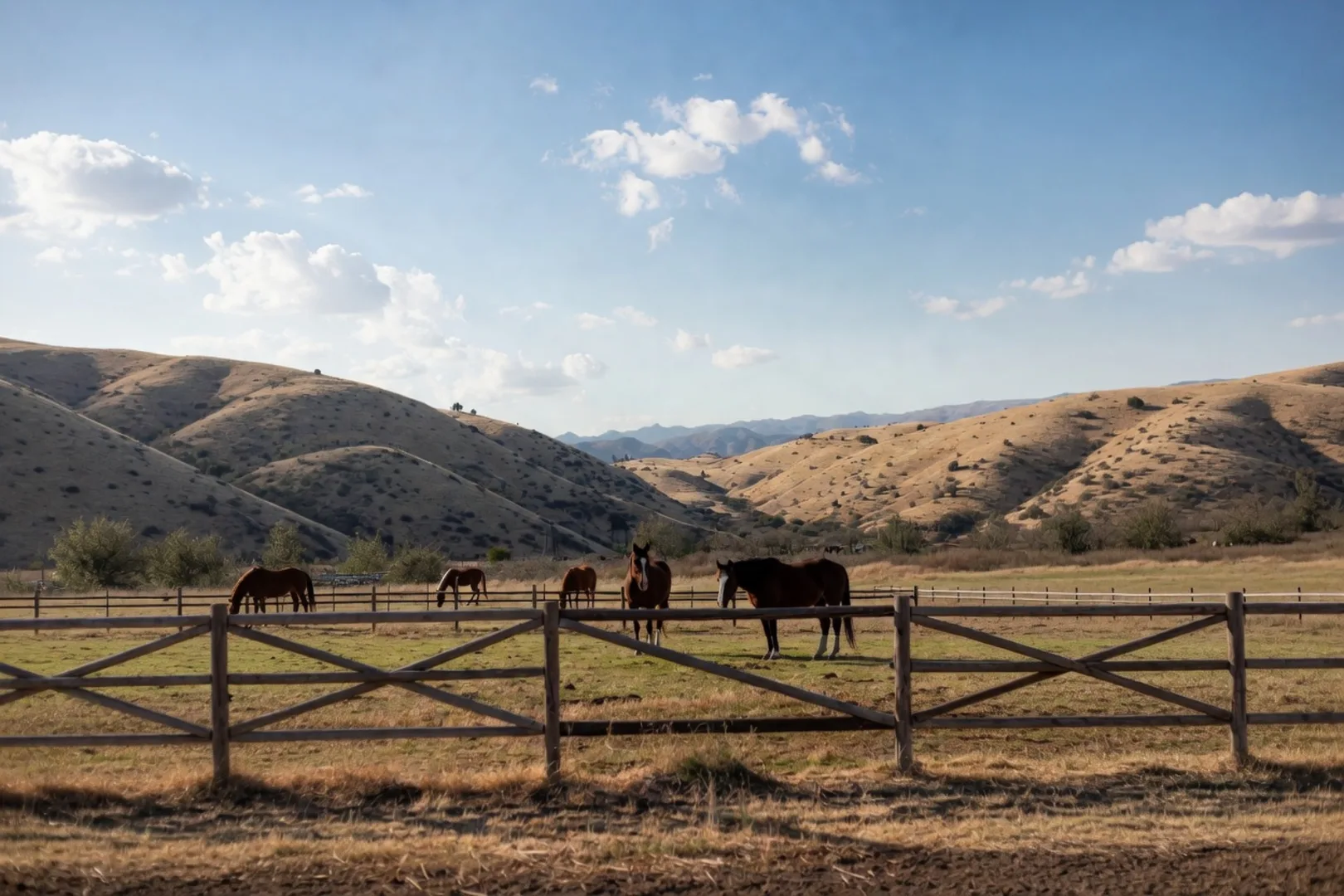
If you have been watching the valley for the last twenty years, you already know the punchline: the loan officer who wrote that letter has closed 800 tract homes in coastal cities and zero properties with a barn on them. The 5-acre rural-residential parcel you are about to write on, with outbuildings, a well, a septic, and three closed comparable sales hiding somewhere in a 12-month window across three rural ZIP codes, is a different underwriting universe. This guide walks you through which horse property loans Temecula buyers actually close on in 2026, why the standard programs come apart on contact, and exactly what to verify before you sign the offer instead of after.
If your search has narrowed to specific neighborhoods, our La Cresta horse property buyer's guide covers the most established equestrian community on the plateau, the existing Banning Solera horse property listing is a turnkey example you can walk through, and the Temecula homes for sale index pulls active inventory. The financing playbook below applies whether you are buying in La Cresta, Wine Country, Wildomar, French Valley, Meadowview, or anywhere else under Riverside County's rural-residential zoning.
For the broader landscape (which neighborhoods actually fit, what to verify on a specific parcel, and how the loan picture connects to the zoning), see our Temecula horse properties guide.
TL;DR
- Conventional (Fannie/Freddie): Closes clean up to about 10 acres with modest outbuildings. Dies on big barns, multiple ag structures, and excessive acreage.
- Jumbo: The default at $1.5M+ (La Cresta, Wine Country estates). Same acreage and outbuilding rules apply, plus tighter reserves.
- VA loan: No acreage cap on paper, but the property has to read primarily residential. Works beautifully for veterans on a 5-acre horse home.
- FHA: Almost never closes on 2+ acres of horse property. Save yourself the application fee.
- USDA Rural Development: Income-limited (1 to 4 person household under $119,850 in 2026). Property must not be income-producing. The quiet entry-level winner.
- Farm Credit / Rural 1st / American AgCredit: The specialist play. Built for this property type. Closes the deals conventional walked away from at the 11th hour.
- The appraisal is where most deals die. Outbuildings often get $0 contributory value. Excess land above 10 acres gets discounted hard. Comparable sales are scarce.
Why most pre-approvals don't survive a horse-property contract
The pre-approval letter from a national branch lender almost always uses a default property tax assumption (1.25% of purchase price), a default insurance assumption, and zero adjustments for rural-residential underwriting. It also assumes your loan will be funded by Fannie Mae or Freddie Mac, which is fine for a tract home but increasingly precarious as you add acreage, outbuildings, and a rural address.
Five things quietly break a horse-property loan in underwriting, and they show up in roughly the same order every time:
- Outbuilding scrutiny. Fannie Mae's selling guide treats large barns, silos, and multiple agricultural structures as commercial-use indicators. A property that "looks like a farm" can fail conventional eligibility regardless of whether you actually farm it. Looking the part is enough.
- Comparable sales scarcity. Appraisers need three recent comparable sales. In La Cresta, Wine Country, or rural French Valley, three closed sales of comparable 5-plus-acre horse properties inside a 12-month, three-mile window can be impossible to find. The valley is generous with views and stingy with comps.
- Excess land at 10+ acres. Standard residential underwriting often gives full appraised value to roughly the first 10 acres and discounts everything beyond as "excess land." A 20-acre La Cresta parcel can appraise for less than the same dollar amount of land split into two 10-acre buyers, which is the kind of math nobody wants explained to them six days from close.
- Outbuilding contributory value. A $200,000 indoor arena, a high-end barn, and miles of pipe fencing can come back from the appraiser at a contributory value far closer to $0 than to replacement cost. The lender lends against the appraisal, not against the price you paid. That gap has ended more contracts than any inspection report.
- Property tax surprises. Generic pre-approvals use a 1.25% blanket. Newer Mello-Roos communities run effective rates of 1.85% or higher. Older horse-property neighborhoods often run lower, no Mello-Roos at all. The DTI ratio shifts in both directions, sometimes by enough to fail qualification on a borderline file. Our Mello-Roos in Temecula guide has the subdivision-by-subdivision math.
The 10-Acre Threshold Is Real
The industry rule of thumb places the cutoff at roughly 10 acres for full residential valuation under conventional underwriting. Above that, the bank may give the first 10 acres full value and discount the remainder, sometimes substantially. If you are buying 15+ acres, ask your lender how they treat excess land before you write the offer, not after the appraisal lands light.
Which loans actually close on a Temecula horse property in 2026
Here is the honest loan-program shortlist, ranked by how often each one closes on a 2-to-20 acre rural-residential horse property in Riverside County. I have watched each of these close. I have also watched buyers waste 30 days chasing the wrong one.
| Program | Best Fit | Acreage Comfort | Down Payment | Watch Out For |
|---|---|---|---|---|
| Conventional (Fannie/Freddie) | Tract-style home on 2 to 10 acres, modest outbuildings | Up to ~10 acres clean | 5% to 20% | Outbuildings, excess land, ag-zoning |
| Jumbo (portfolio) | $1.5M+ La Cresta, Wine Country, premium estates | Up to 20+ acres with the right lender | 10% to 25% | Reserves (often 6 to 12 months), ag-classification |
| VA Loan | Veterans buying primary residence on acreage | No formal cap, but typical-for-area test | 0% | Cannot be working farm; primary residence rule |
| FHA Loan | Rarely a fit for horse property at 2+ acres | Limited; barns reduce eligibility | 3.5% | Outbuildings, ag-use, cap on land value |
| USDA Rural Development | Income-eligible owner-occupant; primary residence | No cap, but residential not income-producing | 0% | 2026 income limit ~$119,850 (1 to 4 person household) |
| Farm Credit / Rural 1st / American AgCredit | Anything conventional rejects; specialty rural-residential | 5+ acres, working operations, hobby farms | 10% to 25% | Rates often slightly above conforming |
Conventional (Fannie Mae and Freddie Mac)
The default, and the right answer for a buyer purchasing a 2 to 5 acre Wildomar or French Valley home with a small barn and a couple of horses. Fannie Mae and Freddie Mac do not publish a hard maximum acreage, but in practice the appraiser must show that comparable residential sales support the property's value, including the outbuildings. The moment the property starts looking commercial-agricultural (multi-stall barn, indoor arena, paddock complex on 10+ acres), conventional eligibility gets sticky in a hurry.
Jumbo (portfolio loans)
Required for any purchase above the conforming loan limit (currently $1,089,300 in Riverside County for a single-family residence, with the 2026 ceiling worth confirming with your lender). Almost every La Cresta purchase and most Wine Country estate purchases land here. Jumbo lenders are typically more flexible on acreage and outbuildings than conforming, but they require larger reserves, often 6 to 12 months of payments held in liquid assets at close. Bring receipts.
VA loan
The Department of Veterans Affairs does not impose an acreage cap, but the property has to read primarily residential. Service members can buy a horse property as long as they intend to live in the main home and the equestrian use is personal rather than commercial. Some VA lenders (Veterans United among them) decline to make loans on working farms regardless of borrower eligibility. Always confirm the specific lender's overlays before you write. A VA loan that closes is a beautiful thing on a 5-acre horse home. A VA loan that gets killed by a lender overlay 8 days from close is not.
FHA loan
Almost never the right answer for a Temecula horse property. FHA does not impose a formal maximum acreage, but the program treats large tracts of farmland, barns, silos, and outbuildings used for agricultural purposes as commercial assets that do not contribute to the appraised value. On a 5-acre rural-residential parcel where outbuildings make up a meaningful share of the property's worth, FHA leaves you under-financed. Skip it. Use conventional or VA instead.
USDA Rural Development single-family loan
The most underused option for entry-level horse-property buyers in Riverside County. Riverside has eligible USDA areas (the official map at eligibility.sc.egov.usda.gov is the authoritative check), and the 2026 income limits for the Single Family Housing Guaranteed Loan Program are roughly $119,850 for households of 1 to 4 and $158,250 for households of 5 to 8. The catch: the property cannot be income-producing. Boarding horses, breeding for sale, or running a training business will likely disqualify the parcel. A small personal-use horse setup on an eligible USDA address slides through clean.
Farm Credit / Rural 1st / American AgCredit
The specialist play, and the answer when conventional has already rejected the property. The Farm Credit System is a cooperative network chartered specifically to serve rural America. In California, the relevant entry points are Rural 1st (which operates here through American AgCredit, with 12 retail offices in the state) and Golden State Farm Credit (which serves seven northern California counties and does not cover Riverside). For a Temecula horse property, your call is American AgCredit / Rural 1st, not the Compeer Financial program you may have read about online. Compeer only operates in Illinois, Minnesota, and Wisconsin, and people email me about it twice a month anyway.
"We recognize that 'going rural' isn't quite the same as it used to be. You can now have internet access and rural health care and school options."
Art Whaley, Chief Lending Officer, Rural 1st, as quoted in The Lane Report (July 2020)
That quote describes the Temecula horse-property buyer almost word for word. The buyer profile in 2026 is not the third-generation rancher with calloused hands and a chest freezer full of last year's beef. It is the orthopedic surgeon from Mission Viejo, the software engineer from Carlsbad, the dual-physician household from north San Diego County. They want acreage, horses, and trail access, and they also want fast fiber, a working home office, a five-minute drive to a decent espresso, and high schools their teenagers will not boycott on principle.
Specialist rural lenders understand that profile. National branch lenders rarely do. The mismatch is why so many Temecula horse-property contracts go into escrow with a conventional pre-approval and come out the other end with the buyer scrambling to refile with a Farm Credit lender five days before closing, watching their earnest money do a slow-motion dance toward the seller's pocket.
The appraisal is where most deals quietly die
Pick the right loan program and you have cleared the first gate. The appraisal is the next one, and it kills more horse-property contracts than every other underwriting issue combined. The good news: all three of the failure modes are predictable, and all three can be anticipated before you write the offer.
Comparable sales scarcity
Conventional appraisals require three comparable sales, generally closed within the last 12 months and within a defined geographic radius. In La Cresta, that radius needs to expand to neighboring rural-residential corridors (De Luz, parts of Fallbrook, the rural pockets above Wildomar) just to find comps. The appraiser must justify the wider radius in writing. A weak comparable selection is one of the most common reasons a horse-property appraisal comes back light, and "weak" is an understatement when the closest true comparable is 4.7 miles away and closed 11 months ago.
Outbuildings often appraise at $0 contributory value
This is the one that catches buyers off guard every single time. The seller spent $200,000 on a covered arena with high-end footing, the kind that drains in a downpour and rides like a dream in July. The lender's appraiser walks the parcel, looks at recent comparable sales, and concludes that the local market does not pay extra for that arena because no comparable buyer paid extra for one. Result: the arena gets a contributory value much closer to $0 than to its replacement cost. The lender lends against the appraised value, not the price you paid. That 200K of footing turns into 30K of wallpaper on the appraisal report.
Excess land discount above 10 acres
Standard residential appraisal practice gives full value to the first 10 or so acres (the typical residential site) and discounts the remainder as excess land. On a 20-acre La Cresta parcel, the back 10 acres often appraise for substantially less per acre than the front 10. Buyers expecting straight-line per-acre value math get a polite surprise on the appraisal report and a less-polite phone call from the loan processor.
Definition: Excess Land
Excess land is the portion of a property's acreage that exceeds what is considered the typical residential lot size for the immediate market. Conventional residential appraisers often value excess land at a discount (typically 30% to 70% off the per-acre rate of the primary site), reasoning that comparable buyers do not pay the same per-acre price for back acreage as they do for the home site. The discount is what makes 20-acre parcels regularly appraise for substantially less than 2x the value of a 10-acre parcel in the same market.
Expert Tip: Hire an appraiser who knows rural-residential
You cannot pick your appraiser on a conforming loan, but you can ask your lender to flag the appraisal for a Riverside County rural-residential specialist rather than a default urban-residential rotation appraiser. Same property, different desk, two completely different numbers. A specialist pulls comps from La Cresta, Fallbrook, De Luz, and parts of Bonsall and knows what an arena is worth. A default urban appraiser pulls comps from central Murrieta and ends up with apples-to-oranges adjustments that hurt the value by 8 to 15 percent. That is not a rounding error. That is the deal.
How DTI math changes on a horse property
Your debt-to-income ratio is the single biggest qualification gate, and the math that worked for a tract home falls apart fast on a horse parcel. For a tract home, the DTI math is mechanical (principal, interest, taxes, insurance, HOA). For a horse property, two extra cost lines move the picture meaningfully.
Property tax variance
Riverside County's base property tax rate runs about 1.05% in Temecula and 1.15% in Murrieta proper. Add Mello-Roos to a newer subdivision (Murrieta Hot Springs, parts of south Temecula, French Valley, Winchester) and the effective rate climbs to 1.85% or higher. Older horse-property neighborhoods (La Cresta, Meadowview, Los Ranchitos, Wine Country east of Butterfield) often run at the base rate alone with no Mello-Roos at all.
Run the math on a $1,500,000 La Cresta purchase at 1.05% effective rate and the annual tax bill is $15,750. Run the same $1,500,000 in a newer Mello-Roos subdivision at 1.85% effective rate and the bill is $27,750. That $12,000 annual gap, divided across 12 months, adds $1,000 to monthly DTI math. On a borderline file, $1,000 of monthly housing cost is the difference between approval and the kind of phone call nobody enjoys making.
Reserves for well and septic
Some lenders require additional reserves on a property served by private well and septic, often 3 to 6 months of estimated annual maintenance held in liquid assets. The amounts are not huge (often $2,000 to $5,000), but they show up in the closing-cost math and surprise buyers who assumed a tract-home reserves calculation. Bring the cushion.
Pro Tip: Pull the parcel's actual property tax bill before pre-approval
Generic pre-approvals use a 1.25% blanket tax estimate. The actual bill on a specific Temecula APN runs anywhere from 1.05% to 1.85%. Pull the most recent property tax bill from the Riverside County Treasurer-Tax Collector portal (you only need the APN), hand it to your loan officer, and ask them to re-run pre-approval against that exact number. This single step prevents most of the "the loan fell apart in underwriting" scenarios I see every spring.
The pre-offer financing checklist
Before you write an offer on any Temecula horse property, walk through this list with your lender. Skipping any of these is how buyers end up scrambling 7 days from close, refiling with a different lender, and watching the seller's patience evaporate in real time.
- Loan program selection. Confirm the program (conventional, jumbo, VA, USDA, Farm Credit) and document why it fits this specific property type.
- Acreage and outbuilding pre-flight. Send the listing photos and lot acreage to your loan officer. Ask in writing: does this property pass underwriting eligibility for the chosen program?
- Property tax verification. Pull the parcel's actual property tax bill (county portal, APN). Re-run pre-approval against the actual number, not the 1.25% estimate.
- Appraisal pre-screen. Ask whether your lender has a Riverside County rural-residential appraisal panel. Generic urban-residential appraisers underperform on this property type, and the difference shows up on the appraisal report.
- Comparable sales check. Have your agent pull three recent comparable sales within the last 12 months and ask the appraisal panel whether they would support an appraisal at the contract price.
- Reserves requirement. Confirm reserves required (months of payment) and any well/septic reserve add-ons. Document the dollar number before you write.
- Loan limit ceiling. Confirm the 2026 conforming loan ceiling for Riverside County. If you are above it, you need a jumbo lender, which is a different application.
- Mello-Roos status. Confirm with the listing agent whether the parcel falls in any Community Facilities District. The bill lives on the property tax record.
- Outbuilding inventory. List every structure (main house, barn, arena, tack room, hay storage, trainer's quarters). Confirm with your lender that the program treats them as residential rather than commercial-agricultural.
- Backup lender. Have a second lender at the ready who closes Riverside County rural-residential. If your first lender pulls out 10 days before close (it happens, and it is always at the worst possible moment), the backup saves the deal.
Working with a lender who actually closes this property type
The single biggest variable in financing a Temecula horse property is whether your loan officer has closed five or fifty deals on this property type before. The mechanics of qualifying for a conforming, jumbo, VA, USDA, or Farm Credit loan are not the differentiator. The differentiator is whether your lender has seen this exact property profile (5 acres, septic, well, outbuildings, no Mello-Roos, three-mile comp radius) at close before, and knows precisely where the deal will hit a snag.
Coastal-California branch lenders rarely have that experience. They write Encinitas tract homes by the dozen and have never closed a La Cresta deal in their careers. Riverside County lenders who specialize in rural-residential and ag-lifestyle properties write this profile every week. The pre-approval letter looks the same on both sides. The closing record does not.
Pro Tip: Get a side-by-side lender comparison on the actual property
For any Temecula horse property worth a real offer, get pre-approval quotes from two or three lenders against the actual APN, not abstract dollar amounts. Compare the rate, the fees, the reserves required, and (the variable that actually matters) the loan officer's stated experience with rural-residential underwriting. The cheaper rate is rarely the right pick if the lender cannot actually close the property type. Run a side-by-side lender comparison with us before you write.
Frequently asked questions
Can I use a conventional loan for a Temecula horse property?
Often yes, up to about 10 acres with modest outbuildings. The eligibility test is whether comparable residential sales support the property's value, including the barn, arena, and any other structures. Properties with multiple agricultural outbuildings or 10+ acres frequently fail conventional. Above the conforming loan limit (about $1,089,300 in Riverside County for 2026, verify with your lender), you are in jumbo territory regardless of property type.
Will FHA finance a horse property?
Rarely, and almost never above 2 acres. FHA treats large outbuildings, barns, silos, and similar structures as commercial assets that do not contribute to the appraised value. Most Temecula horse properties have enough outbuilding value that FHA leaves the buyer under-financed. Use conventional, VA (if eligible), or Farm Credit instead.
Can a veteran use a VA loan to buy a Temecula horse property?
Yes, with two caveats. The property must be your primary residence (you intend to live in the main home), and the equestrian use must be personal, not commercial. The VA does not impose an acreage cap, but the property's primary purpose must read residential. Some VA lenders (Veterans United among them) decline working-farm loans regardless. Always confirm the specific lender's overlays before you write.
Are USDA Rural Development loans an option in Riverside County?
Yes, in eligible areas. Use the official USDA eligibility map at eligibility.sc.egov.usda.gov to check the specific address. The 2026 income limits sit at roughly $119,850 for a household of 1 to 4 and $158,250 for a household of 5 to 8. The property must be your primary residence and cannot be income-producing (no boarding, no breeding for sale, no commercial training). Personal-use horses on an eligible address are fine.
What is a Farm Credit loan and when do I need one?
Farm Credit is a cooperative network of lenders chartered to serve rural America, and its consumer-lending arm (Rural 1st in California, through American AgCredit) is built specifically for rural-residential and hobby-farm property types. You typically need one when conventional has rejected the property for excess land, agricultural outbuildings, or comparable-sales scarcity. Rates run slightly above conforming, but the program closes deals that no Wall Street loan will touch.
How do appraisers value barns and arenas in Temecula?
Often at much less than replacement cost. The lender lends against contributory market value, which is what comparable buyers in the area have actually paid extra for similar improvements. If recent La Cresta or Wine Country sales did not show measurable price premiums for barns and arenas (and they often do not), the appraiser may assign $0 to $30,000 in contributory value to a $200,000 arena. The seller's investment in the structure does not transfer dollar-for-dollar to your appraisal.
What is the 10-acre threshold I keep seeing referenced?
An informal industry rule of thumb that most conventional residential appraisers give full value to roughly the first 10 acres of a parcel and discount the rest as excess land. The exact threshold varies by lender and area, but the principle holds. If you are buying 15 to 25+ acres, ask your lender how they will treat the excess land before you write the offer. The appraised value can come in materially below the per-acre purchase price expected.
Key Takeaways
- Standard pre-approvals fail on horse property. Outbuildings, excess land, comparable scarcity, and property tax assumptions all break the Encinitas-tract-home template.
- Pick the right program before the offer. Conventional and jumbo handle most cases; VA works for veterans on a residential primary; FHA almost never works; USDA fits income-eligible owner-occupants on non-income-producing parcels; Farm Credit / Rural 1st / American AgCredit is the specialist play.
- Underwrite the actual parcel. Pull the real property tax bill, the actual outbuilding list, and the comparable-sales radius before pre-approval. Generic numbers create generic surprises.
- The appraisal is the second gate. Outbuildings often get $0 contributory value, excess land discounts above ~10 acres, and comparable sales are scarce. Use a rural-residential specialist appraiser when possible.
- Have a backup lender. Coastal-California branch lenders rarely close this property type. Always have a Riverside County rural-residential specialist on standby.
Bottom line: how to actually finance a Temecula horse property
The order of operations for a Temecula horse-property buyer in 2026 is short, and skipping a step costs deposits. Get pre-approved with a lender who has closed at least a dozen rural-residential properties in Riverside County, not a national branch lender who has closed 800 tract homes in coastal cities. Pull the actual property tax bill on every parcel you are seriously considering. Verify outbuildings, acreage, and Mello-Roos before you write. Have a backup lender on speed dial. Use the appraisal-pre-screen step to flag rural-residential specialist appraisers when possible.
Most Temecula horse-property contracts that fall apart in underwriting fall apart for the same reasons every spring: the buyer trusted a generic pre-approval, the lender did not actually understand the property type, and the appraisal came in below contract because the comparable sales got picked by an algorithm that has never set boots on red clay. None of that is the buyer's fault. It is the buyer's deposit at risk.
Ready to run a side-by-side lender comparison on the specific property you are about to write an offer on? Get a horse-property financing comparison with the actual property tax bill, the outbuilding inventory, and the right loan program for a 5+ acre rural-residential purchase. The pre-approval letter from your coastal-California branch is not the pre-approval that will close on a Temecula horse property. The right one will, and the horses are waiting.