Murrieta vs Temecula: The Side-by-Side
If you've narrowed your move down to Murrieta vs Temecula, congratulations: you've already finished the hardest part of buying a home in Southwest Riverside County. Both cities sit on the same freeway, share the same Mediterranean climate, and trade buyers back and forth like polite neighbors swapping casseroles. The differences that actually decide your monthly payment, your morning commute, and whether you can walk to a tasting room all live in the fine print, and that's what this guide is for.
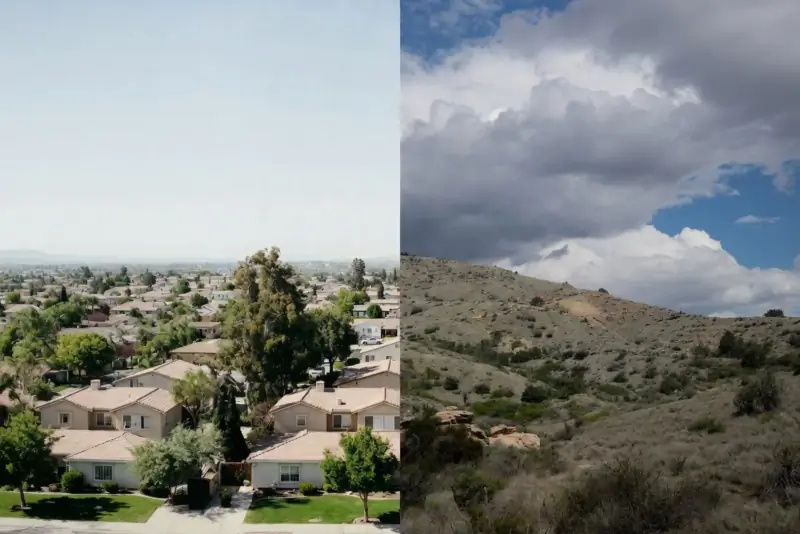
Living in Murrieta vs Temecula isn't a "good vs bad" comparison. It's a "which flavor of really nice" comparison, and the right answer depends on whether your weekends look more like a winery picnic or a soccer tournament.
TL;DR
- Home prices: Temecula runs roughly 10% to 15% higher (about $722K vs $680K median in early 2026).
- Schools: Murrieta Valley Unified edges Temecula Valley Unified at the district level, but the gap is narrow and reverses at several individual schools.
- Property taxes: Murrieta's base rate is slightly higher (1.15% vs 1.05%), but Mello-Roos varies by neighborhood far more than by city.
- Commute: Temecula wins for San Diego commuters, Murrieta wins for LA, Orange County, and Riverside commuters. The 15 freeway is the spine.
- Vibe: Temecula leans tourist economy, wine country, Old Town. Murrieta leans classic SoCal suburb, parks, slightly safer crime stats.
- Best move: pick a school zone and a community first. The city name comes second.
Are Murrieta and Temecula really that different?
Yes, but the differences are more about flavor than fundamentals. Murrieta and Temecula sit shoulder to shoulder along Interstate 15, share a Mediterranean climate, and have nearly identical population counts (Murrieta hovers around 111,000, Temecula around 109,000 in 2026). Both routinely land on "best places to live in California" lists, and homes on either side of the city line often look like cousins because they were built by the same regional developers in the same boom years.
Where they diverge is in personality. Temecula leans tourist economy and wine country, with Old Town's wooden boardwalks, Pechanga Resort to the south, and a hot-air-balloon-festival kind of energy. Murrieta is the polished suburb next door, with 52 parks, 1,350 acres of open space, and a reputation as one of the safest cities in California.
If you're choosing on lifestyle, Temecula is the more obvious "destination" pick. If you're choosing on the spreadsheet (price per square foot, school district score, drive time to LA), Murrieta usually wins by a hair.
| Category | Temecula | Murrieta |
|---|---|---|
| Population (2026) | ~109,400 | ~111,100 |
| Median home price (early 2026) | ~$722K to $775K | ~$680K to $695K |
| Base property tax rate | 1.05% | 1.15% |
| School district (Niche 2026 CA rank) | TVUSD #63 | MVUSD #54 |
| Violent crime per 100K | ~142 | ~66 |
| Best for commute to | San Diego, Carlsbad | LA, OC, Riverside |
| Signature draw | Wine country, Old Town | Parks, larger lots, safety |
How do home prices compare in 2026?
Temecula's median home price runs about 10% to 15% higher than Murrieta's in 2026, mostly because of the wine-country halo and the upscale neighborhoods on the south side of town. Recent MLS snapshots from early 2026 put Temecula's median sale price between $722,500 and $775,000 depending on the data window, while Murrieta's median sale price held closer to $680,000 to $695,000 over the same stretch.
The roughly $50,000 to $80,000 spread isn't because Murrieta's housing stock is worse. In many cases Murrieta gives you slightly larger lots and a touch more square footage per dollar. What you're paying for in Temecula is the access premium: the wineries, the Old Town walkability, the proximity to Pechanga Resort, and the resale cachet that comes with a Temecula ZIP code on the listing flyer.
Pro Tip: Compare price per square foot, not just sale price
Median sale price flattens too many variables. A $700K Murrieta home with a 9,000 sq ft lot and 2,800 finished square feet is a different deal than a $700K Temecula home with a 6,000 sq ft lot and 2,400 square feet, even though the headline number matches. Ask your agent to pull comps in dollars per square foot and lot size, not just price.
If wine country proximity is the actual reason you're moving south, the De Portola Trail and Rancho California Road corridors will dominate your shortlist. Browse the current Temecula homes for sale, the wine country listings, or the horse-property inventory to calibrate your numbers against actual on-market product.
Which city has better schools?
Murrieta Valley Unified School District (MVUSD) edges out Temecula Valley Unified (TVUSD) at the district level, but the gap is narrow and reverses at the individual-school level for several standout campuses on the Temecula side. Niche's 2026 California rankings put MVUSD at #54 and TVUSD at #63, both comfortably above the state median.
The district difference is real, but small enough that buyers routinely cross the city line for a specific school zone, not for the district itself. Murrieta Valley HS and Vista Murrieta HS anchor MVUSD, while Great Oak HS, Temecula Valley HS, and Chaparral HS anchor TVUSD. Test scores, AP offerings, and athletic programs are competitive across all five.
Both cities also have a deep bench of private, parochial, and charter alternatives, including Linfield Christian and Rancho Christian on the Temecula side and Calvary Murrieta on the Murrieta side. The full Temecula schools guide has the rosters and feeder maps.
Expert Tip: Don't pick a city. Pick a school zone.
School-attendance boundaries don't follow city lines, and a Temecula mailing address can sit inside Murrieta Valley Unified (and vice versa). Pull the boundary map from the district website before you write an offer, and verify the exact school the property feeds into with the listing agent in writing. Two homes on the same street can feed different elementary schools, and that delta is usually worth $25K to $50K of resale value over a 7-year hold.
What's the property tax difference, including Mello-Roos?
Murrieta's base property tax rate is slightly higher (1.15447%) than Temecula's (1.04785%), but Mello-Roos special assessments swing the total bill by thousands of dollars per year and depend entirely on which neighborhood you buy in, not which city. The city you choose barely matters for total property tax. The community matters enormously.
Definition: Mello-Roos
A Mello-Roos special assessment is a parcel-level tax used to fund infrastructure (schools, roads, parks, fire stations) inside newly developed Community Facilities Districts. It's tacked onto your property tax bill, runs for a fixed term (often 25 to 40 years), and is in addition to the standard 1% Proposition 13 base rate. Older, established neighborhoods often have low or zero Mello-Roos because the bonds were paid off years ago.
New-build neighborhoods in either city, French Valley, Winchester, Murrieta Hot Springs, parts of south Temecula, can carry an extra $2,500 to $4,500 per year in Mello-Roos to fund the schools, parks, and roads that came with the development. Drive five minutes to an older subdivision and the same-priced home might have $0 in special assessments.
On a $700,000 home, the spread between a 1.20% effective tax rate and a 2.00% effective tax rate is about $5,600 per year, or roughly $467 per month. That's bigger than most rate-shop savings on the mortgage itself, which is why we built a side-by-side lender comparison that runs the full PITI math on every property you're seriously considering.
"The biggest mistake buyers make in Temecula and Murrieta is comparing list prices instead of total monthly carrying costs. Two homes priced the same can have a $400 a month gap on the tax line alone."
That gap doesn't show up in your pre-approval letter. It shows up in your November tax bill, and again every November after that, for the next two or three decades.
The fix is mechanical: ask the listing agent for the most recent property tax bill on every property you're seriously considering, and ask your lender to underwrite to the actual amount, not the estimated 1.25% blanket figure most loan officers default to.
Which city has the better commute?
Temecula is the better pick if you commute south to San Diego or Carlsbad. Murrieta is the better pick if you commute north to Corona, Riverside, Orange County, or Los Angeles. The difference can be 30 to 60 minutes per day in either direction, depending on what time you leave.
Interstate 15 is the spine. Temecula sits at the southern end of the Inland Empire's commuter corridor (last stop before the 15 climbs into northern San Diego County). Murrieta sits one exit north. That sounds trivial on a map, but at 7:30 AM the difference between getting on the 15 at Winchester Road versus Murrieta Hot Springs Road is the difference between a defined-end commute and a slog.
A few rules of thumb that hold in 2026:
- Working in San Diego or Carlsbad? Temecula. Living any further north than Murrieta and commuting south is, frankly, masochism.
- Working in Corona, Riverside, or south Orange County? Murrieta. You'll save real time at the I-15/I-215 split and on the Ortega corridor.
- Working remotely with the occasional office trip? Either. Pick on lifestyle, not minutes.
- Working in the Temecula or Murrieta business parks themselves? Live in whichever city is on the same side of the freeway as your office. The 15 cuts both cities in half and the at-grade crossings clog at rush hour.
Murrieta vs Temecula: lifestyle and vibe
Temecula is the entertainment district. Murrieta is the bedroom community. Both are family-friendly, both are safe, both have great restaurants, but the day-to-day rhythm feels different.
Temecula's signature lifestyle pulls
- Old Town's restaurants and tasting rooms attract a real weekend crowd
- 40+ wineries inside a 15-minute drive of most homes
- Pechanga Resort and Casino (concerts, championship golf, spa)
- The Temecula Valley Balloon and Wine Festival each spring
- A slightly younger, more cosmopolitan demographic for a city this size
Murrieta's signature lifestyle pulls
- 52 parks plus 1,350 acres of open space (the Santa Rosa Plateau is right there)
- Violent crime around 66 per 100,000 (top tier in California)
- Larger average lot sizes and noticeably more single-family stock
- A smaller, more local-feeling downtown
- Quick access to Temecula's amenities without paying to live in them
That safety profile isn't an accident. Murrieta has built its civic identity around public safety for the better part of two decades, and city leadership repeatedly cites police and fire as the foundation that makes the rest of the lifestyle (the parks, the school ratings, the family-heavy demographic) work the way it does.
It's also why the violent crime rate sits where it does. Cities that fund safety generously tend to attract residents who pay attention to those numbers, and the effect compounds over time.
"The quality of life in Murrieta is apparent with our commitment to police and fire."
Dr. Lisa DeForest, outgoing Mayor, City of Murrieta, as quoted in Patch (Jan 31, 2024)
Pro Tip: Buy Murrieta, visit Temecula
A surprising number of Murrieta residents treat Temecula as their "going out" city, picking up the safety stats and lower price-per-square-foot of Murrieta on the home side and the wineries, restaurants, and Old Town energy of Temecula on the weekend side. It's a defensible play if you don't need to walk to wine country.
Best neighborhoods in each city
Both cities have neighborhoods that punch above their city's average. The right one depends on whether you prioritize lot size, school zone, walkability, or HOA amenities.
Top Temecula neighborhoods to watch
- La Cresta: equestrian estates on multi-acre lots, west of the city, premium lifestyle pricing
- Paloma Del Sol / Paseo Del Sol: family-focused, mature landscaping, walkable to elementary schools
- Temeku Hills: gated golf course community with a mix of single-story and two-story floor plans
- Redhawk: south Temecula, golf, top-rated elementary schools, easy 15 access
- Wine country (De Portola Trail and Rancho California Road): estates on usable acreage, often with mini-vineyards
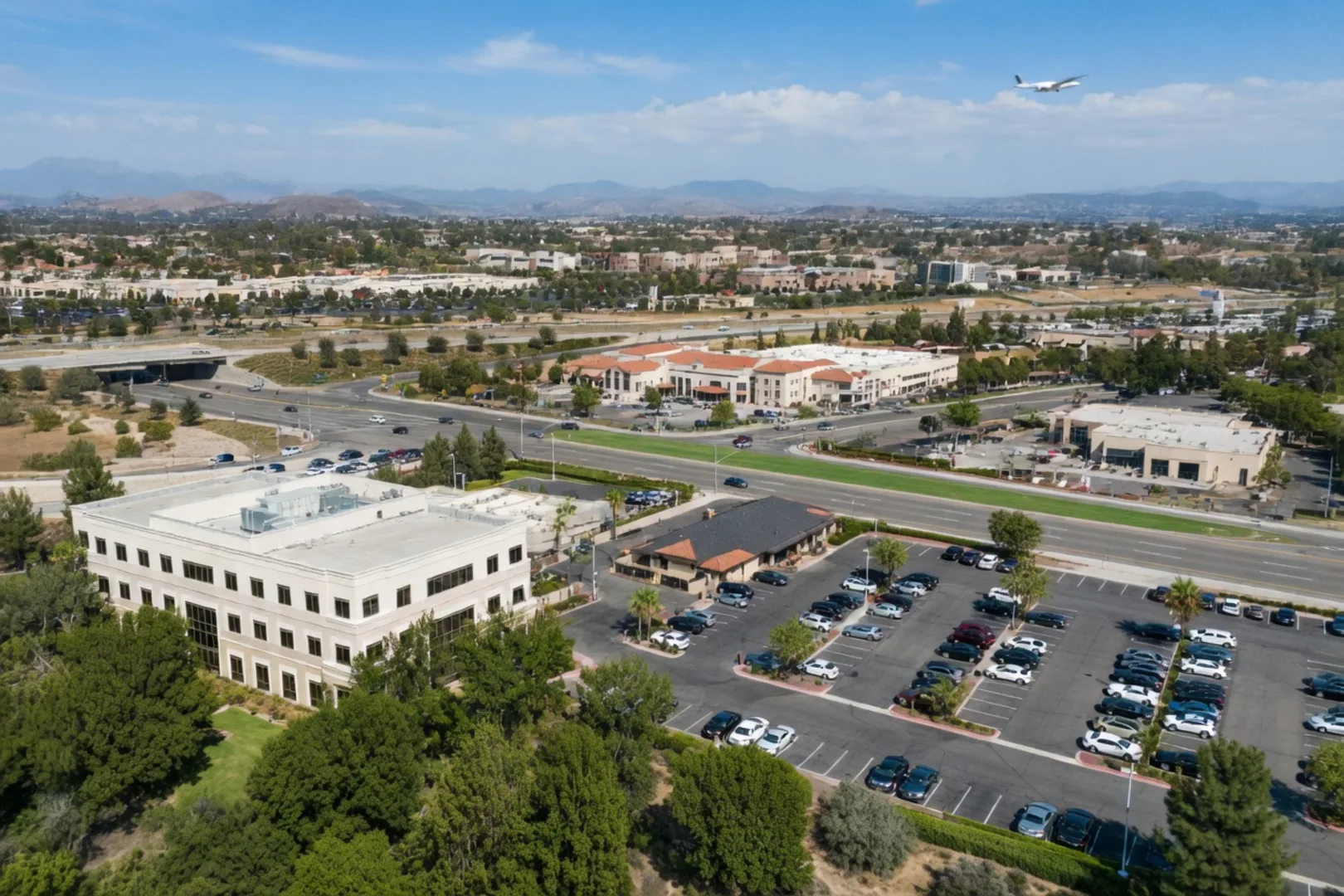
Top Murrieta neighborhoods to watch
- Greer Ranch: gated, hilltop, family-friendly, premium views
- Copper Canyon: well-zoned for top schools, easy 15 access, mid-2000s build quality
- Bear Creek: gated, Jack Nicklaus-designed golf course, country-club lifestyle
- The Colony: 55+ active adult community with a private clubhouse
- Murrieta Hot Springs: newer construction, walkable to retail, higher Mello-Roos exposure
For a deeper take, see the pillar guide on the best neighborhoods in Temecula and the broader living in Temecula overview.
Who should pick which?
The honest version of the decision tree:
Pick Temecula if
- You want the wineries, Old Town, and tourist-economy lifestyle dividends
- You commute south to San Diego or Carlsbad
- You're chasing a specific Temecula Valley Unified school (Great Oak HS especially)
- You're buying a horse property, wine-country estate, or south Temecula golf home
- You like the idea that visitors come to you on weekends
Pick Murrieta if
- You want more home, more lot, and more parking pad per dollar
- You commute north to LA, Orange County, or Riverside
- You're prioritizing a Murrieta Valley Unified zone (Vista Murrieta HS especially)
- Crime statistics are a deciding factor (Murrieta's are exceptional)
- You're fine driving 10 minutes south for the Temecula amenities you actually use
Key Takeaways
- It's a flavor choice, not a quality choice. Both cities are top-tier inland-Southern-California suburbs. The wrong question is "which is better." The right question is "which fits how I actually live."
- Total monthly cost beats list price. Mello-Roos can swing your payment by $400 a month or more. Underwrite to the actual tax bill, not the 1.25% rule of thumb.
- School zones don't follow city lines. Verify the feeder schools on every property in writing before you write an offer.
- Direction of commute decides the city. South means Temecula. North means Murrieta. Remote means whichever lifestyle wins.
- Use a side-by-side lender quote. The Mello-Roos delta usually beats the rate-shop delta. Compare PITI on the actual property, not abstract pre-approvals.
Frequently asked questions
Is Murrieta cheaper than Temecula?
Yes, generally. Murrieta's median home price ran roughly $680,000 to $695,000 in early 2026, while Temecula's median sat between $722,500 and $775,000 depending on the data window. That's about a 10% to 15% spread on the median, and Murrieta tends to throw in slightly larger lots and more square footage at the same price point. Property tax base rates flip the other way (Murrieta is slightly higher), but Mello-Roos varies far more by neighborhood than by city.
Is Murrieta or Temecula safer?
Murrieta is statistically safer. Murrieta's violent crime rate sits around 66 per 100,000 residents, well below California's 441 and the US average of 379. Temecula's violent crime rate hovers around 142 per 100,000, which is still well below state and national averages but roughly double Murrieta's. Both cities are family-friendly and routinely show up on national "safest cities" lists.
Which city has better schools, Murrieta or Temecula?
Murrieta Valley Unified ranks slightly higher than Temecula Valley Unified at the district level (Niche's 2026 California rankings put MVUSD at #54 and TVUSD at #63). The gap is narrow, and individual schools on the Temecula side (Great Oak HS, Vail Ranch Middle, several elementaries in Redhawk) are competitive with or better than the Murrieta district average. Pick a specific school zone, not a city.
Do Murrieta and Temecula both have Mello-Roos?
Yes, both do, and the variation within each city is bigger than the variation between them. Newer master-planned communities (Murrieta Hot Springs, parts of south Temecula, French Valley, Winchester) carry $2,500 to $4,500 per year in Mello-Roos special assessments. Older neighborhoods on either side often have $0 because the bonds were paid off. Always pull the most recent property tax bill before writing an offer. For a full subdivision-by-subdivision breakdown of who pays what, see our Mello-Roos in Temecula guide.
How long is the commute from Temecula or Murrieta to San Diego?
Off-peak, both cities run about 60 to 75 minutes to downtown San Diego or Carlsbad along Interstate 15. At rush hour, Temecula's southern position saves 15 to 30 minutes versus Murrieta on the south-bound trip because you board the freeway later and miss the Murrieta merge backup. For LA-bound commutes, the math reverses: Murrieta saves about 15 to 20 minutes versus Temecula because you skip the Murrieta merge from the south.
Which city is better for retirees?
Both cities have strong 55+ communities. Murrieta has The Colony (gated, active adult, well-established). Temecula has access to nearby 55+ neighborhoods like Heritage Mountain View. Retirees who prioritize quiet, parks, and lower crime often lean Murrieta. Retirees who want the wine-country and Old Town lifestyle often lean Temecula. Both are walkable inside their respective HOA communities and offer single-story floor plans in volume.
Bottom line: Murrieta vs Temecula
Living in Murrieta vs Temecula isn't a coin flip. It's a values question. Murrieta gives you a bit more home, a bit more park, and a noticeably safer crime profile for slightly less money. Temecula gives you the wineries, the Old Town energy, and the resale cachet for a 10% to 15% premium. The two cities share a freeway, a climate, and a basic suburban DNA, but the fine print on tax bills, school zones, and commute direction will quietly decide which one you'll actually be happy in five years from now.
Ready to run the numbers on a real property in either city? Get a side-by-side lender comparison with the actual Mello-Roos and tax figures for the homes you're considering. The list price is the cheap part. The monthly is what you'll feel.