Temecula Homes / Horse Properties
Temecula Horse Properties for Sale
Compare the acreage, trail access, zoning, taxes, and financing rules that separate a true Temecula horse property from a listing that only sounds like one.
Photo tour
The framework
Five Questions to Answer Before Touring Any Property
Will a property support your horses or just look good in photos?
-
Acreage | How much usable land do you really need?
One to two usable acres may work for a hobby setup. Five acres gives most owners room for a small arena and 2-4 horses. Ten or more acres fits training, breeding, boarding, or a larger program.
-
Trail Access | Don't settle for "near trails."
Check if the access is deeded, HOA-maintained, shared rural lanes, or trailer-out only. "Near trails" is never enough.
-
How is the Neighborhood?
La Cresta, Meadowview, Los Ranchitos, Wine Country, Oakridge Ranches / Glen Oaks, and De Luz each serve different lifestyle choices and commutes.
-
Tax Exposure
Most established horse neighborhoods have no Mello-Roos. Fringe or newer areas can add thousands per year to your tax bill.
-
Financing Path
Lenders (conventional, jumbo, VA, USDA, rural) evaluate acreage and outbuildings differently. Your pre-approval should match the parcel before you write an offer.
When those five answers are clear, the right shortlist gets much easier to spot.
There is no single Temecula horse-property market. A true search usually crosses six different neighborhoods, several loan programs, two school districts, and a set of zoning suffixes that decide what you can legally do with the land. This guide gives you the working map: where to look, what to verify, how financing changes on acreage, and which details can turn a promising listing into the wrong parcel.
The pillar in 7 lines
- Six neighborhoods work for horse buyers: La Cresta, Meadowview, Los Ranchitos, Wine Country, Oakridge Ranches / Glen Oaks, De Luz.
- The newer master-planned subdivisions (Wolf Creek, Sommers Bend, Harveston) do not, regardless of marketing language.
- Lot sizes range from about 1 acre in Meadowview to 40+ acres in De Luz. Pick the acreage your actual horse use requires, not the acreage that photographs best.
- Median price tiers: ~$1.0M (Meadowview entry) to ~$3M+ (La Cresta estate, De Luz orchard).
- Riverside County zoning (RR / RA) controls horse counts. 5 mature horses per acre in RR; sliding formula in RA. 35-foot setback from any dwelling, always.
- Most coastal-California pre-approvals fail in underwriting on this property type. Use a lender who actually closes Riverside County rural-residential.
- Active horse-property inventory rotates fast. Browse current listings below this guide.
What counts as a Temecula horse property?
A Temecula horse property is any residential parcel inside the broader Temecula Valley (Temecula, Murrieta, La Cresta, French Valley, Wildomar, De Luz) where county or city zoning permits horse-keeping, the lot is large enough to support that use legally, and the home is configured (or can be reasonably configured) for an owner-operator equestrian lifestyle. The parcel typically sits in Residential Rural (RR) or Residential Agricultural (RA) zoning under Riverside County, with lot minimums starting at 1 acre and ranging up to the 40+ acre De Luz parcels. The "horse property" label depends on three things: zoning, lot size, and HOA permission. All three must align before a barn is legal.
That definition deliberately excludes the marketing version of the phrase. A 0.25-acre Wolf Creek tract home with "horse property potential" in the listing description is not a horse property. The HOA may forbid livestock, the lot may not accommodate the required setback from a dwelling, and subdivision zoning may not permit horse-keeping at all. Treat listing language as an invitation to verify, not as proof.
Which Temecula neighborhoods actually fit horse buyers?
Six. La Cresta sits on the Santa Rosa Plateau west of Murrieta with 5+ acre minimum lots and deeded trail access to the Cleveland National Forest. Meadowview is a 1,175-acre community inside Temecula city limits with 23 miles of trails and a private equestrian center. Los Ranchitos is 189 parcels of 2 to 5 acres with no streetlights, no curbs, and a country lane feel inside a 7-minute drive of central Temecula. Wine Country (the De Portola and Rancho California corridor) blends vineyards and pasture with an established equestrian trail system. Oakridge Ranches and Glen Oaks are the eastern wine-country neighbors with HOA-maintained trails. De Luz is roughly 20,000 acres of avocado country west of the 15, where 10 to 40+ acre parcels combine working orchards with horse infrastructure.
Each neighborhood fits a different buyer. The better question is not "which one is best?" It is "which one matches how I will actually use the land?" For a side-by-side breakdown of all six neighborhoods, including lot sizes, prices, trail access, school zones, and buyer profiles, see our deep-dive on the best Temecula neighborhoods for horse properties.
La Cresta: the cluster's anchor neighborhood
La Cresta is the premier equestrian community in the Temecula Valley and the right call for the buyer who wants destination land and a generational hold. Sitting on the Santa Rosa Plateau in unincorporated Riverside County, La Cresta covers five separate property owner associations (La Cresta proper, La Cresta Highlands, Meadow Oaks, Santa Rosa West, and The Trails), each with its own minimum lot size and CCRs. Lot minimums start at 5 acres. Santa Rosa West runs 10. Some parcels exceed 20.
The buyer who picks La Cresta usually wants the ride to start at the driveway and connect to thousands of acres of protected open space. Median home price as of April 2026 sits at roughly $1.8M, with active inventory ranging from $549K for raw land to $7.75M for estate properties on 20+ acres. The full La Cresta deep-dive, including zoning, the five POAs, well and septic verification, and school zones, lives in our La Cresta horse property buyer's guide.
How buyers actually finance a horse property here
Many standard pre-approvals are not built for a Temecula horse property. A conventional approval that works for a tract home may not account for outbuildings, scarce comparable sales, excess land, or property tax differences. The five things that most often break a horse-property loan in underwriting are outbuilding scrutiny, limited comparable sales, excess-land discounts above roughly 10 acres, low or zero contributory value for barns and arenas, and property tax surprises that change the debt-to-income calculation.
The realistic loan-program shortlist runs from conventional (works up to ~10 acres with modest outbuildings) to jumbo (the default for La Cresta and Wine Country estates), VA (for veterans on residential primary), USDA Rural Development (income-eligible owner-occupants on non-income-producing parcels), and Farm Credit / Rural 1st / American AgCredit (the specialist play when conventional rejects the property). FHA almost never works at 2+ acres of horse property.
| Program | Best Fit | Acreage Comfort | Down Payment |
|---|---|---|---|
| Conventional (Fannie/Freddie) | Tract-style home on 2 to 10 acres, modest outbuildings | Up to ~10 acres clean | 5% to 20% |
| Jumbo (portfolio) | $1.5M+ La Cresta, Wine Country, premium estates | Up to 20+ acres with the right lender | 10% to 25% |
| VA Loan | Veterans buying primary residence on acreage | No formal cap, typical-for-area test | 0% |
| FHA Loan | Rarely fits horse property at 2+ acres | Limited; barns reduce eligibility | 3.5% |
| USDA Rural Development | Income-eligible owner-occupant, residential primary | No cap, residential not income-producing | 0% |
| Farm Credit / Rural 1st | Anything conventional rejects; specialty rural-residential | 5+ acres, working operations, hobby farms | 10% to 25% |
The full loan-program comparison, appraisal traps (excess land discount, $0 outbuilding contributory value, comparable-sales scarcity), and pre-offer financing checklist live in our horse property loans Temecula guide.
Riverside County zoning and the horse-count math
Riverside County zoning controls horse-keeping more than any HOA does. The two relevant designations for horse property are Residential Rural (RR) and Residential Agricultural (RA), each with a numeric suffix indicating the minimum lot size in acres (RR5, RR10, RR20). RR allows up to 5 mature horses per acre, generally with the most permissive horse-keeping rules. RA uses a sliding formula starting at 4 horses on the first acre, with 2 horses on each additional acre.
Definition: Riverside County RR vs RA Zoning
Residential Rural (RR): the rural homestead classification. Up to 5 mature horses per acre or any part thereof. Most permissive horse-keeping rules in the county.
Residential Agricultural (RA): 2 mature horses on each 20,000 square feet, with 4 horses on the first acre and 2 additional horses per each acre after that. Slightly more restrictive than RR per-acre but still generous.
Common rule across both: all large animals must be kept (fed, sheltered, watered) at least 35 feet from any adjacent dwelling. That setback shapes where you can put barns, paddocks, and arenas on any parcel.
In practice, a 5-acre RR5 La Cresta parcel can legally allow up to 25 mature horses under county rules. Most owner-operators keep far fewer, often 2 to 6, but the zoning headroom matters for boarding, breeding, or a small training program. The 35-foot setback rule catches buyers off guard most often. If the plan depends on putting a barn 20 feet from the back patio, the plan needs to change even on a large parcel.
| Zoning | Min Lot | Horses Allowed | Setback | Typical Temecula Neighborhood |
|---|---|---|---|---|
| RR5 | 5 acres | 5 mature per acre (up to 25 on a 5-acre lot) | 35 ft from any dwelling | La Cresta proper, parts of Wine Country |
| RR10 | 10 acres | 5 mature per acre (up to 50 on a 10-acre lot) | 35 ft from any dwelling | Santa Rosa West, parts of Glen Oaks |
| RR20 | 20 acres | 5 mature per acre | 35 ft from any dwelling | Larger La Cresta and De Luz parcels |
| RA5 to RA20 | Varies | 4 on first acre, 2 per additional acre | 35 ft from any dwelling | Some De Luz, Oakridge Ranches sub-zones |
| City of Temecula horse zoning | ~1 acre | City code; check with planning | City setback rules | Meadowview, Los Ranchitos |
The Mello-Roos question on horse property
Most established Temecula horse neighborhoods carry no Mello-Roos. La Cresta, Meadowview, Los Ranchitos, most of Wine Country, and most of De Luz predate the newer Community Facilities District era. Newer Mello-Roos subdivisions in Murrieta Hot Springs, French Valley, and parts of south Temecula usually do not allow horses anyway, so the two issues rarely overlap. When they do overlap on a fringe parcel, the assessment can add $2,500 to $4,500 a year on top of the base property tax.
The subdivision-level breakdown and the formula for calculating Mello-Roos impact on your debt-to-income ratio live in our Mello-Roos in Temecula guide. For a typical horse-property buyer in La Cresta or Los Ranchitos, the expected answer is zero. For a buyer considering a newer tract or fringe parcel, pull the actual tax bill before you write.
How much does a Temecula horse property cost in 2026?
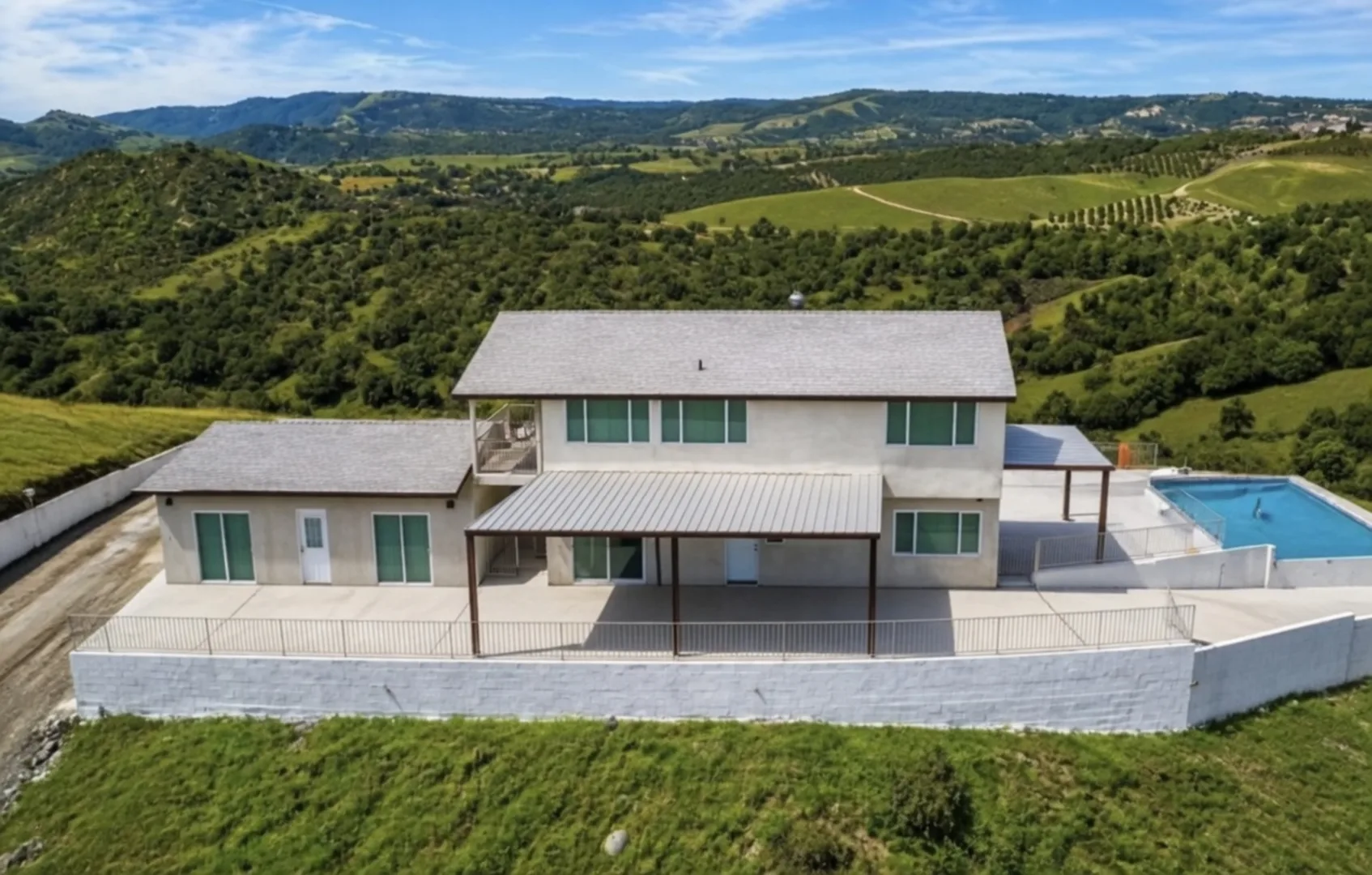
Pricing varies by usable acreage, location, improvements, water, access, and how much value the market gives to the horse infrastructure already in place. Here is the realistic spread across the six working horse-property neighborhoods as of April 2026.
| Neighborhood | Lot Size | Typical Price (2026) | Median (where reported) |
|---|---|---|---|
| La Cresta | 5 to 20+ acres | $549K (raw land) to $7.75M (estate) | ~$1.8M |
| Meadowview | ~1 acre | $1.0M to $1.6M | $349 to $694 / sqft |
| Los Ranchitos | 2 to 5 acres | $710K to $2.5M | ~$1.525M (12-mo) |
| Wine Country (De Portola / Rancho CA) | 5+ acres typical | $1.2M to $5M | varies widely |
| Oakridge Ranches / Glen Oaks | 5+ acres | $1.0M to $2.5M | 15-25% below comp La Cresta |
| De Luz | 10 to 40+ acres | $1.0M to $3M+ | asset is the land |
Two patterns matter. First, price-per-acre compresses as acreage grows (a 20-acre parcel rarely costs 2x what a 10-acre parcel costs in the same neighborhood). Second, outbuilding investments rarely transfer dollar-for-dollar to resale. A $200,000 covered arena adds far less to appraised value than to replacement cost. Compare $/sqft AND $/acre when running comps.
"Eighty percent of the land was set aside for open space, including horse country, and 20% was to be used for high-density development."
Dan Stephenson, Chairman, Rancon Group / Europa Village, as quoted in the Galway Downs Equestrian profile (March 5, 2025)
That land-use ratio is why Temecula has horse country at all. The original master plan for the valley deliberately reserved most acreage for open space and rural-residential use, with the high-density development concentrated in the eastern flatlands closer to the freeway. It is not an accident that La Cresta and Wine Country sit where they do. They sit there because someone decided, decades ago, that they would.
The practical implication for buyers is that the existing horse-friendly footprint is structurally protected by master-plan precedent, county zoning, and active community advocacy (the Temecula Equestrian Coalition, the Temecula Valley Horsemen's Association, the Rancho California Horsemen's Association). Buying into a 5-acre La Cresta parcel is buying into a land-use bargain that was made before most of today's residents arrived.
What to verify before you write the offer
The things that kill a Temecula horse-property deal are not the things that kill a tract-home deal. Wood rot is fixable. A 35-foot setback you didn't notice on the site plan is not. Walk this list before you sign anything, not during the inspection contingency:
- Zoning suffix. Confirm whether the parcel is RR5, RR10, RR20, RA5, or another designation. The horse-count math depends on it.
- HOA / POA assignment. Many neighborhoods (La Cresta, Meadowview) have multiple sub-associations with different rules. Get the specific association and the CCRs in writing.
- Well and septic. Most horse-property parcels are on private well and septic. Pull the most recent well-water test (gallons per minute, mineral content, depth) and the septic certification.
- Fire-Wise status. The Santa Rosa Plateau and other rural-residential areas are Fire-Wise USA approved. Verify the parcel meets the 100-foot defensible space rule and that fire vehicle access is current.
- Trail access. Not every lot in a "trail-access neighborhood" has direct trail access from the property line. Walk it before you buy if trail access is core to your use case.
- Setback math. Confirm where existing barns, paddocks, and arenas sit relative to the 35-foot dwelling setback rule.
- School assignment. Most La Cresta parcels feed Murrieta Valley Unified. Most Meadowview, Los Ranchitos, Wine Country, and Oakridge Ranches / Glen Oaks parcels feed Temecula Valley Unified. Verify in writing for your specific parcel.
- Property tax bill. Pull the most recent property tax bill from the Riverside County Treasurer-Tax Collector portal (you only need the APN). Use that exact figure for pre-approval, not the 1.25% blanket estimate.
- Lender selection. Pre-approval with a lender who closes Riverside County rural-residential regularly. Generic coastal-California pre-approvals frequently fail in underwriting on this property type.
- Backup lender. Always have a second lender on standby. If the first one backs out 10 days before close (it happens), the backup saves the deal.
Expert Tip: Tour each shortlist neighborhood twice, once during the day, once at dusk.
Daytime tours show you the property. Dusk tours show you the neighborhood. The difference matters because the rhythm of the place, including traffic noise, lighting, neighbor activity, and distance from services, is what you actually live with. If two properties look equal on paper, the evening tour often makes the decision clearer.
Daily logistics: schools, drive times, water, fire
School assignment varies parcel to parcel even within a single neighborhood. La Cresta parcels mostly feed Murrieta Valley Unified (Cole Canyon Elementary, Thompson Middle, and Murrieta Valley HS or Vista Murrieta HS depending on the parcel). Meadowview, Los Ranchitos, Oakridge Ranches, Glen Oaks, and Wine Country parcels mostly feed Temecula Valley Unified, with Great Oak HS, Temecula Valley HS, and Chaparral HS as the typical high-school anchors. De Luz is split, with parts feeding Murrieta Valley Unified and parts feeding Fallbrook Union schools.
Drive times are a real variable. Meadowview and Los Ranchitos sit 5 to 10 minutes from central Temecula. Wine Country and Oakridge Ranches / Glen Oaks run 10 to 15 minutes. La Cresta and De Luz can add another 10 to 15 minutes on top of that. The right rural property still has to work on a normal weekday.
Outside Temecula city limits (La Cresta, Wine Country, De Luz), the water comes from a well in your yard and the wastewater goes into a tank on your property. That changes the appraisal, the lender's questions, and the daily maintenance reality of where Tuesday morning starts. A well delivering the right gallons-per-minute is the single most important infrastructure question on a rural parcel. Verify the number before you write the offer, not after.
Pro Tip: Pull the actual property tax bill before pre-approval, not after.
Generic pre-approvals use a 1.25% blanket tax estimate. The actual bill on a specific Temecula APN can be 1.05% (older horse neighborhoods) or 1.85% (newer Mello-Roos subdivisions). Pull the most recent property tax bill from the Riverside County Treasurer-Tax Collector portal (you only need the APN), give it to your loan officer, and ask them to re-run pre-approval against that exact number. This single step prevents most "loan fell apart in underwriting" scenarios.
Active horse properties for sale right now
The card grid below shows what is actively for sale in the Temecula Valley right now, filtered to 1+ acre by default as a practical floor for real horse-keeping use. Adjust the filters for acreage, beds, baths, or price ceiling. Open any card for the satellite preview, parcel data, and listing details.
Frequently asked questions
What size lot do I need for a horse in Temecula?
One mature horse needs roughly 1 to 2 acres of usable land for pasture, arena, and barn under typical Riverside County rules. Two to four horses on the same property typically need 5 acres. A working operation, breeding program, or small training facility usually needs 10+ acres. The legal minimum (one horse on a 20,000 square foot RA parcel, or up to 5 horses per acre on RR) is more permissive than the practical minimum.
Which Temecula neighborhood is best for horse properties?
It depends on the buyer profile. La Cresta is the destination community for serious equestrians and generational holders. Meadowview is the in-town equestrian community for buyers who want horses without giving up a community pool and a 10-minute Costco run. Los Ranchitos is the country-quiet 2-to-5 acre option. Wine Country is the vineyard-meets-pasture answer. Oakridge Ranches and Glen Oaks are the lower-entry-cost Wine Country neighbors. De Luz is the working-orchard option. Full breakdown in our best neighborhoods guide.
Do Temecula horse properties have Mello-Roos?
Most do not. La Cresta, Meadowview, Los Ranchitos, most of Wine Country, and most of De Luz predate the post-1990 Community Facilities District era and carry zero Mello-Roos. Some Oakridge Ranches / Glen Oaks parcels vary. Always pull the actual property tax bill from the Riverside County portal (APN required) before assuming. Full subdivision-by-subdivision breakdown in our Mello-Roos guide.
Can I get a conventional mortgage on a Temecula horse property?
Often yes, up to about 10 acres with modest outbuildings. The eligibility test is whether comparable residential sales support the property's value, including the barn, arena, and any other structures. Properties with multiple agricultural outbuildings or 10+ acres frequently fail conventional. Above the conforming loan limit (about $1,089,300 in Riverside County for 2026), you are in jumbo territory regardless of property type. The full loan-program comparison lives in our horse property loans Temecula guide.
How many horses can I keep on a 5-acre Temecula property?
Up to 25 mature horses on a 5-acre RR5 parcel under Riverside County zoning, which permits 5 mature horses per acre in Residential Rural zones. RA zones use a sliding formula (4 horses on the first acre, 2 on each additional acre, so a 5-acre RA parcel allows 12 horses). Most owner-operators keep 2 to 6 horses, well under the legal maximum. Pasture management and barn capacity, not zoning, are the real constraints.
Are Temecula horse properties on city water and sewer?
Inside Temecula city limits (Meadowview, Los Ranchitos), often yes. Outside city limits (La Cresta, Wine Country, De Luz), almost always no. Most rural Temecula horse-property parcels are served by private well and septic, sometimes shared with neighboring lots through deeded easement. A reliable well is the most important infrastructure question on rural parcels. Always pull the well-water test and the septic certification before close.
Is La Cresta in Temecula or Murrieta?
Neither, technically. La Cresta is unincorporated Riverside County. The mailing address is Murrieta, ZIP 92562, but the community is not part of the City of Murrieta proper, which means county zoning applies (not city). Schools are Murrieta Valley Unified. Locals call it "La Cresta" rather than identifying it with either city. Full La Cresta breakdown in our La Cresta horse property guide.
Key Takeaways
- Six neighborhoods work. La Cresta, Meadowview, Los Ranchitos, Wine Country, Oakridge Ranches / Glen Oaks, and De Luz. The newer master-planned tracts do not, regardless of marketing.
- Zoning controls horse-keeping more than HOAs do. RR allows 5 horses per acre. RA uses a sliding formula. Both require a 35-foot setback from any dwelling.
- Mello-Roos and horse-keeping rarely overlap. Most legitimate horse neighborhoods predate the CFD era and carry zero Mello-Roos.
- Pre-approval has to fit the property. Coastal-California branch lenders rarely close this property type. Use a Riverside County rural-residential specialist, and have a backup lender on standby.
- The appraisal is the second gate. Outbuildings often appraise at $0 contributory value. Excess land above ~10 acres often discounts heavily. Comparable sales are scarce. Plan accordingly.
- Tour each shortlist neighborhood twice, once during the day and once at dusk. The neighborhood you live in is the one you experience at 8 pm.
About Temecula horse property
- Temecula Equestrian Coalition: regional advocacy organization protecting equestrian land use, economic viability, and cultural heritage in Wine Country.
- Temecula Valley Horsemen's Association (TVHA): dedicated collective of professionals protecting the equestrian traditions of the Temecula Valley.
- Rancho California Horsemen's Association (RCHA): maintains horse-friendly winery directory and equestrian trail advocacy.
- Galway Downs Equestrian Center: 242-acre eventing facility on Showalter Road, host of the American Eventing Championships.
- Riverside County Planning Department FAQ: official zoning guidance including horse-keeping rules under RR and RA designations.
- Riverside County Code Title 17 (Zoning): full zoning ordinance, the authoritative source for what is permitted on any parcel.
- Equine Land Conservation Resource (ELCR): national nonprofit advancing the conservation of land for horse-related activity.
- California Department of Fish and Wildlife: Santa Rosa Plateau Ecological Reserve: 10,000-acre protected area adjacent to La Cresta horse country.
Bottom line: how to actually buy a Temecula horse property in 2026
Answer the five questions at the top honestly. Trim the search to two or three neighborhoods. Pull the actual property tax bill on every parcel that makes the cut. Use a lender who closes Riverside County rural-residential properties regularly, and keep a backup on standby. Verify zoning, HOA, and CCR alignment before you sign. Tour each finalist twice, once in daylight and once in the evening. The work in a horse-property purchase is the verification. Buyers who do it early have cleaner escrows.
Ready to compare financing on a specific property? Get a horse-property financing comparison using the actual property tax bill, outbuilding inventory, acreage, and loan program options for a 1 to 40 acre rural-residential purchase in Riverside County.
Sources: Greenleaf Real Estate Los Ranchitos guide, Greenleaf Meadowview guide, La Cresta Property Owners Association, LaCresta.com real-estate snapshot, Homes.com Los Ranchitos market data, Greenleaf De Luz guide, Galway Downs Equestrian / Dan Stephenson profile, Riverside County Planning Department FAQ, Riverside County Title 17 zoning code.
Ready to look at inventory?
Browse active Temecula horse properties
The list below starts at 1+ acre by default. Adjust acreage, beds, baths, price, or sort order to match your actual use case.
See what's for sale right nowActive Temecula horse properties
Default filter: 1+ acre, sorted by acreage. Adjust the filters or browse the full Temecula Homes inventory to widen the search beyond horse-property candidates.
-
9.62 ac
$1,075,000
45050 Camaron Rd, Temecula, CA 92590
-
4 bd ·3 ba ·2,646 sqft
-
4.67 ac
$899,000
39210 Grassy Rd, Temecula, CA 92592
-
3 bd ·2 ba ·1,716 sqft
-
2.20 ac
$735,999
514 E Victory St, Banning, CA 92220
-
3 bd ·2 ba ·1,512 sqft