Horse Property for Sale in Temecula CA: Best Neighborhoods for 2026
You have already made the harder decision. You traded the Pelotons for pasture, the freeway noise for hoof beats, the once-a-week stable visit for a horse you can hear from the kitchen window. The question now is which Temecula neighborhood deserves the next twenty years of your life. The best Temecula neighborhoods for horse properties are not the ones with the most square footage. They are the ones where the lot, the zoning, the trail access, and the vibe line up with the buyer you are about to become.
This guide walks the actual map. Six neighborhoods that work, three that do not, and a clear-eyed read of who picks each one. Read it before you book your first tour. The right shortlist is the rest of this conversation.
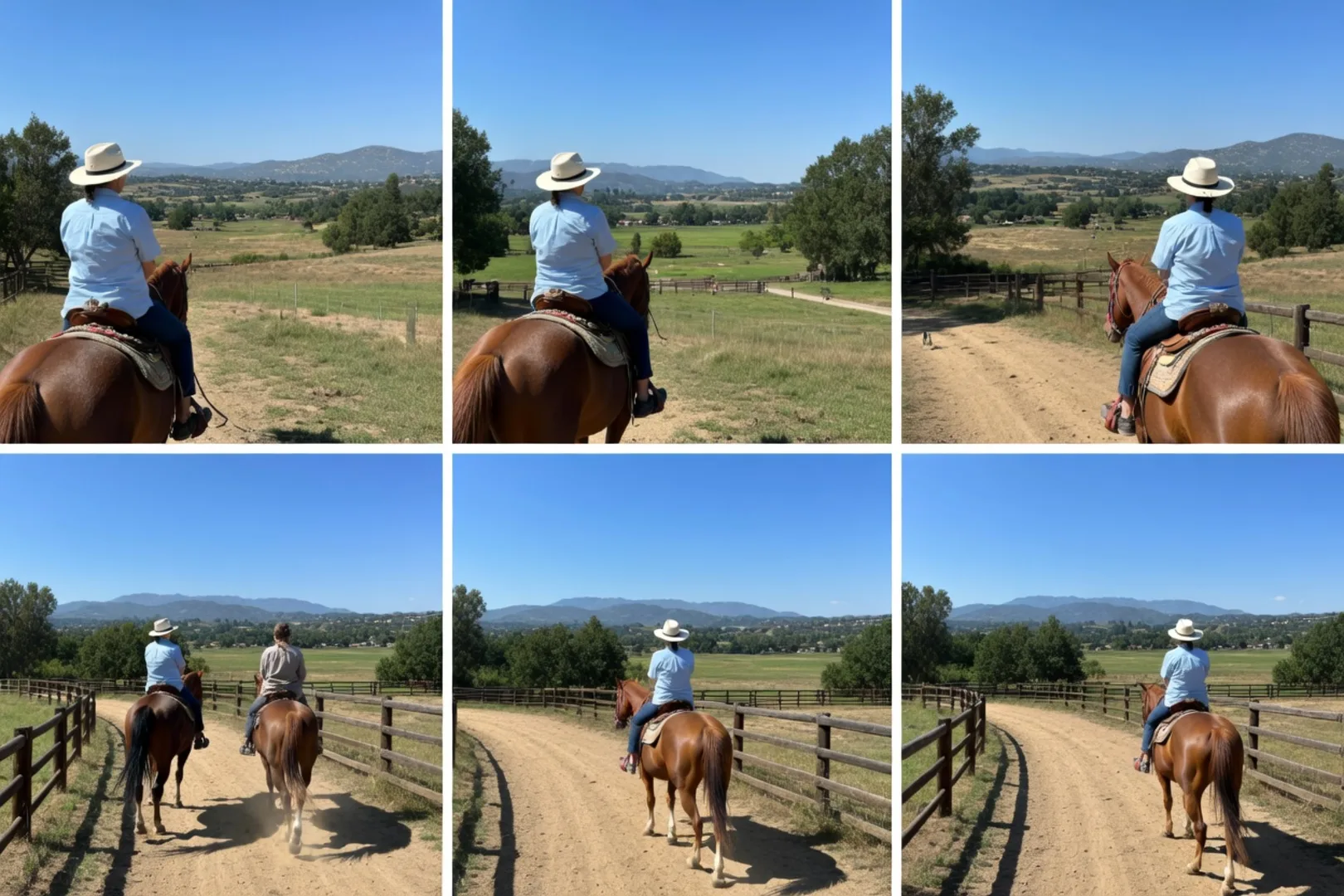
TL;DR
- La Cresta: premier 5+ acre equestrian community on the Santa Rosa Plateau. Buyers who want destination land and a generational hold.
- Meadowview: 1,175-acre community in the heart of Temecula with 23 miles of trails. Buyers who want horses and a community pool in the same week.
- Los Ranchitos: 189 parcels of 2 to 5 acres, no streetlights, country feel, 5 minutes to the freeway. Buyers who want quiet without the drive.
- Wine Country (De Portola / Rancho California): vineyard-meets-pasture. Buyers who want horses, a small grape block, and dinner at the winery down the road.
- Oakridge Ranches and Glen Oaks: eastern wine-country neighbors with 5+ acre lots and HOA-maintained trails. Buyers who want La Cresta amenities at slightly lower entry cost.
- De Luz: 20,000+ acres of avocado country west of the 15. Buyers who want a working orchard plus pasture, ten-acre minimums, and a willingness to drive a little further.
- Skip: Wolf Creek, Sommers Bend, Murrieta Hot Springs. Newer Mello-Roos tract communities. They have "Temecula" in the address and zero room for horses.
How to think about Temecula horse-property neighborhoods
The right framework is not "which neighborhood is best." It is "which neighborhood matches the buyer I am about to be." Five questions narrow the list quickly:
- Lot size you actually need. One horse and a hobby setup needs 1 to 2 acres. Two to four horses and a small arena needs 5. A working operation, breeding program, or trainer's facility needs 10 plus.
- Trail access. Some neighborhoods have miles of deeded community trails connecting to the Cleveland National Forest. Others have you trailering out for every meaningful ride. The difference is the daily quality of life, not the resale value.
- Mello-Roos exposure. The newer tract communities marketed as "Temecula horse property" often carry $2,500 to $4,500 a year in special assessments and forbid the actual barns and arenas you came for. The older horse neighborhoods predate the Mello-Roos era and run cleaner. (Our Mello-Roos in Temecula guide has the subdivision-by-subdivision math.)
- Drive time to amenities. A horse property is a lifestyle. The lifestyle still includes Trader Joe's. Two minutes to the freeway versus twenty minutes is a real daily-life delta.
- School zone. If you have school-age kids, the school assignment matters more than the ZIP code. Most of the neighborhoods on this list feed Temecula Valley Unified or Murrieta Valley Unified, but boundaries vary parcel to parcel.
Definition: Horse-Property Neighborhood
For purposes of this guide, a horse-property neighborhood is a geographically defined community where county zoning permits horse-keeping, lot sizes are typically 1 acre or larger, and at least some homes are configured with barns, arenas, paddocks, or trail access. It is not the same as "a neighborhood that allows pets." Many newer Temecula subdivisions allow domestic animals but explicitly forbid the kind of structures and acreage that horse ownership actually requires.
La Cresta: the destination community
La Cresta is the right call for the buyer who wants land first and a house second. Sitting on the Santa Rosa Plateau west of Murrieta off Clinton Keith Road, La Cresta is unincorporated Riverside County, with five separate property owner associations (La Cresta proper, La Cresta Highlands, Meadow Oaks, Santa Rosa West, and The Trails). Lot minimums start at 5 acres. Santa Rosa West runs 10 acres. Some parcels exceed 20.
The buyer who picks La Cresta is not buying a home. They are buying a position. They want their afternoon ride to leave from their own driveway and connect to thousands of acres of protected open space. They want their property tax bill to be predictable (no Mello-Roos here, since the community predates the post-1990 CFD era). And they understand that 97 days on market is normal in this segment, because the right buyer takes a few weeks to surface.
Median price as of April 2026 sits at roughly $1.8M, with active inventory ranging from $549K (raw land) to $7.75M (estate properties on 20+ acres). For the full deep dive, see our La Cresta horse property buyer's guide.
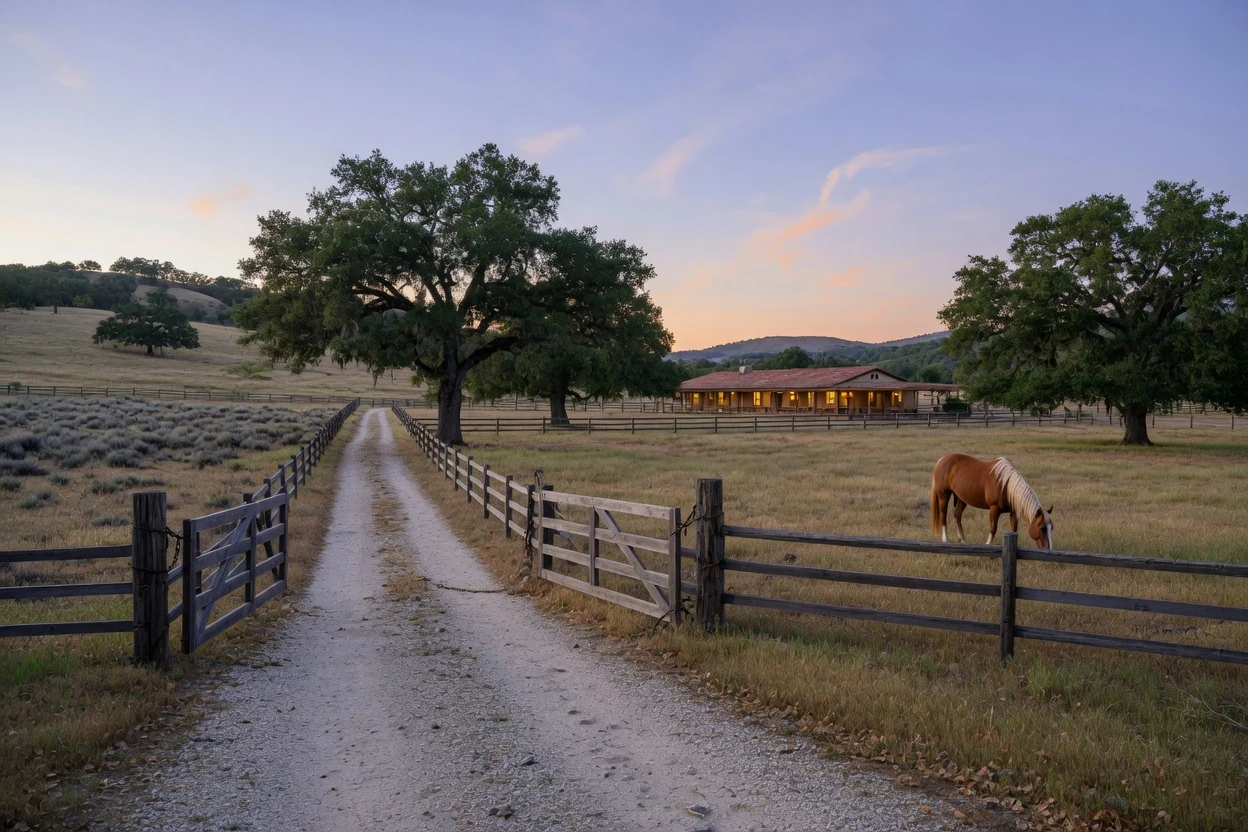
Pro Tip: La Cresta has five POAs. Verify which one your parcel sits in.
La Cresta Property Owners Association, La Cresta Highlands, Meadow Oaks, Santa Rosa West, and The Trails each have their own dues, CCRs, and architectural review. Two homes on the same road can fall under different associations with different rules about fence height, outbuilding placement, and ADUs. Confirm in writing before you write the offer.
Meadowview: the in-town equestrian community
Meadowview is the right call for the buyer who wants horses without trading the rest of life for them. The 1,175-acre community sits inside Temecula city limits with about 900 residents, an HOA of $239 quarterly, and 23 miles of walking, biking, and horse trails inside the community itself.
The buyer who picks Meadowview wants the morning trail ride and the afternoon pool day on the same property. They want their kids in Temecula Valley Unified, the Costco run to be 10 minutes, and a community clubhouse with two heated pools, a spa, tennis courts, and a dedicated equestrian center. Most homes are custom-built on lots large enough for personal horse facilities, with prices generally running $349 to $694 per square foot.
This is the Temecula horse property that does not feel rural. It feels like a planned community that happens to have an equestrian center. For some buyers that is the dream. For others (the buyer who picks La Cresta) that is too much HOA. Pick honestly.
Los Ranchitos: the rural-quiet 2-5 acre option
Los Ranchitos translates to "Little Ranches," and the name does the work. The community consists of 189 parcels ranging from 2 to 5 acres, sandwiched between downtown Temecula and the wine country corridor, with no streetlights, no curbs, and no sidewalks. Four miles of equestrian trails run through the community itself.
The buyer who picks Los Ranchitos is the one who wants country quiet at the end of a 7-minute drive. They want a porch wide enough for two rocking chairs, a barn the previous owner built in 2003, and a pasture where the horses can see the snow on Mount San Jacinto in February. They are not the buyer who wants 10 acres. They want the right 3.5 acres, where the topography pushes the barn far enough from the kitchen that the kitchen still smells like the kitchen.
Median sale price over the last 12 months: $1,525,000, up roughly 13% year over year. Active listings span $710K to $2.5M depending on age, lot size, and improvements. The freeway is a 5- to 10-minute drive, and most Temecula amenities are within a 10- to 15-minute reach.
Pro Tip: The 2-5 acre Los Ranchitos sweet spot is a market segment of its own.
Los Ranchitos parcels almost never sit unsold for long because the 2-5 acre, in-town, no-Mello-Roos profile has no real substitute in Temecula proper. Meadowview is more amenity-rich. La Cresta is bigger and farther. Los Ranchitos is the only place where you get the "country lane" feeling within 7 minutes of a Trader Joe's. If a Los Ranchitos listing comes up that fits your needs, move quickly.
Wine Country: vineyard meets pasture
The Wine Country corridor (De Portola Road and Rancho California Road, east of Butterfield Stage) is the right call for the buyer who wants the horses, the working acreage, and a tasting room as a backyard option. De Portola Road branches south off Rancho California and winds through an equestrian zone with estate homes, horse ranches, and 11 wineries on the De Portola Wine Trail. A community-built equestrian trail runs the length of the corridor, from Valle de Los Caballos to Oak Mountain Road.
The buyer who picks Wine Country is the buyer who wants to ride to Maurice Car'rie's hitching post for a glass of viognier on a Saturday afternoon, then ride home before dinner. They want the option of a small grape block alongside the pasture. They want their property to be both a home and a working place. Properties here range widely, often $1.2M to $5M, and many parcels are 5+ acres with usable land for horses, vineyards, or both.
The Wine Country corridor has been an equestrian zone since long before the wineries arrived in volume. The Temecula Valley Horsemen's Association, the Temecula Equestrian Coalition, and Galway Downs (the eventing facility on Showalter Road) all have deep roots here, and that institutional weight means the equestrian use is protected by community precedent rather than by HOA whim.
For the buyer choosing between Wine Country and the more residential equestrian neighborhoods like Meadowview, the question is whether you want a property that is also a working agricultural place or a property that happens to have horses. Wine Country leans toward the former, and the buyers who pick it tend to be the ones who like that distinction.
"We are proud to support the equestrian heritage of the Temecula Valley."
Ken Smith, Co-owner, Galway Downs Equestrian Center, as quoted in USEA News (August 5, 2025)
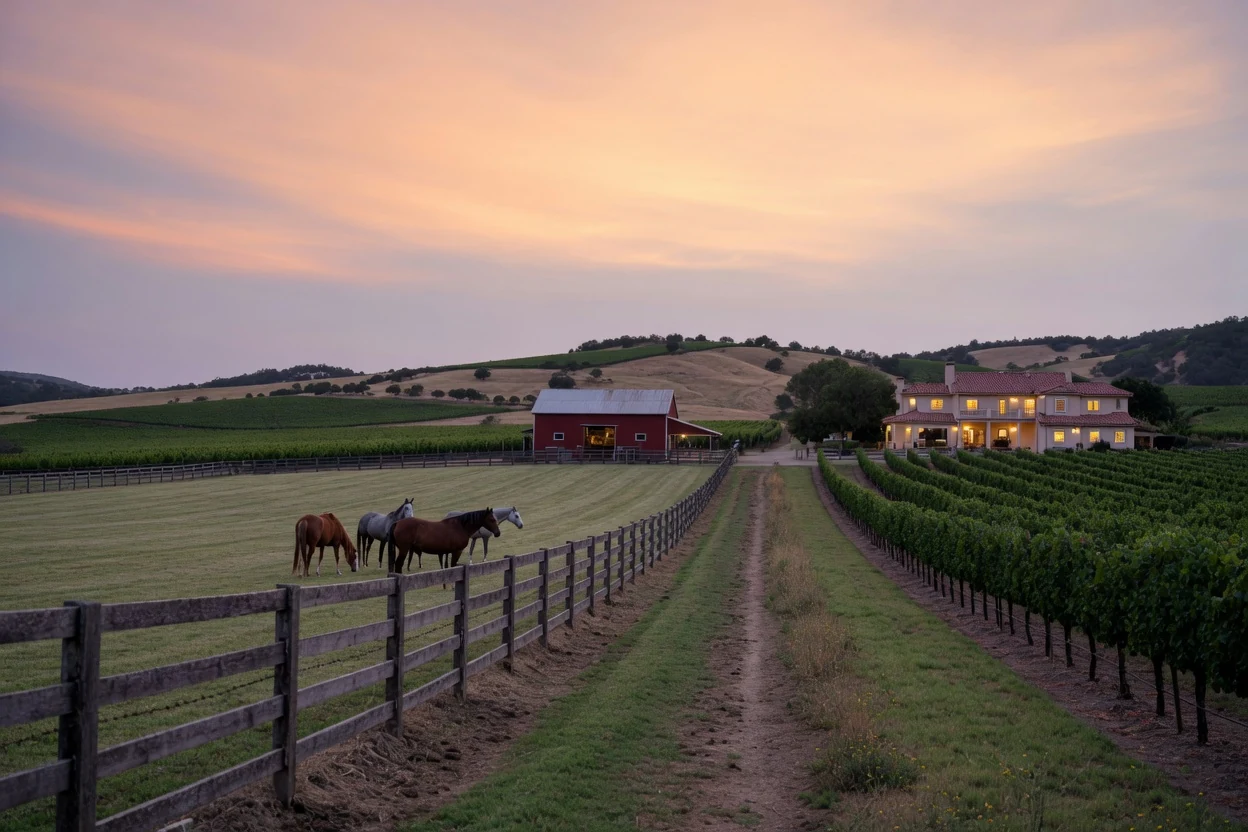
Oakridge Ranches and Glen Oaks: the wine-country neighbors
Oakridge Ranches and Glen Oaks sit just east of Wine Country proper, with riding trails maintained by their respective homeowners associations and lot sizes typically starting at 5 acres. They are often described in the same breath as Wine Country because the roads, the views, and the horse-friendly zoning are continuous, but the home stock and price tier are slightly different.
The buyer who picks Oakridge Ranches or Glen Oaks is the buyer who wants the La Cresta lifestyle without the La Cresta entry cost. They get usable acreage, HOA-maintained trails, and proximity to the wineries, often at a price tier 15 to 25% below comparable La Cresta inventory. Most homes have direct trail access from the property line, and most parcels are configured with at least basic horse facilities.
This is the segment where the price-per-acre math gets interesting. Two homes on opposite sides of the Wine Country boundary can have very different price-per-square-foot numbers despite being functionally identical for a horse buyer.
De Luz: the working-property buyer
De Luz is roughly 20,000 acres west of Interstate 15, mostly used for farming, with rolling hills and vast views of avocado and orange groves. Properties here typically run 10, 15, 20+ acres, with some pushing to 40. Covenants and zoning permit horses and equestrian facilities. Many properties combine income-producing groves (avocado, citrus, even Tango mandarins) with pasture and horse infrastructure.
The buyer who picks De Luz is buying land with a house on it, not a house with land around it. They are the buyer who has done their research on water rights, well capacity, and property tax base rate. They are the buyer who wants the option of an income-producing orchard alongside the pasture, who is comfortable with a longer drive to retail, and who values the quiet that 20+ acres buys you. The drive into central Temecula runs 15 to 25 minutes depending on the parcel.
Pricing varies enormously here. A 5-acre parcel without much improvement might run $700K. A 20-acre Hass avocado grove with 1,500 producing trees and an established home can run $2M+. The asset is the land, and the income-producing trees are part of the math.
If you want to see what the entry end of De Luz looks like in practice, the 9.62-acre parcel at 45050 Camaron Rd is a useful current benchmark: A-1-10 zoning, valley views from the rear porch, private pool, and room for a barn, orchard, or ADU at $1,075,000.
Neighborhoods to skip if you actually want horses
Some Temecula neighborhoods carry the address but not the lifestyle. These are the newer master-planned subdivisions where the lots are small, the CCRs are strict, and the Mello-Roos line items are loud:
| Neighborhood | Why It's Not Horse-Friendly | What It Is Instead |
|---|---|---|
| Wolf Creek | Tract subdivision, lots typically under 0.25 acres, HOA forbids horses, $2,000 to $3,200 annual Mello-Roos | Family-friendly suburban tract |
| Sommers Bend | Master-planned 2020s build, $3,300 to $3,700 annual Mello-Roos, no horse zoning | Premium amenity community for younger families |
| Murrieta Hot Springs (newer tracts) | Sub-quarter-acre lots, walkable retail, no horse zoning, Mello-Roos exposure | Walkable suburban convenience |
| Harveston | Lake-amenity master plan, sub-half-acre lots, no horse zoning | Family suburb with lake amenities |
| Roripaugh Ranch | 2000s-2010s tract, smaller lots, Mello-Roos, no horse zoning | Mid-tier suburban tract |
| Paloma del Sol / Paseo del Sol | 1990s tract, smaller lots, no horse zoning | Walkable family suburb |
These are good neighborhoods. They are just not horse neighborhoods. Buying one expecting to add a barn later is how buyers end up in code-enforcement disputes with the city. If you also weigh Murrieta against Temecula generally, see our Murrieta vs Temecula buyer's guide for the broader city-line comparison.
"Has Horse Property Potential" is a real-estate-listing red flag
Watch for listings in non-horse neighborhoods that describe the property as having "horse property potential" or "room for a horse." If the parcel is under 1 acre, in an HOA tract, or in a Mello-Roos-funded subdivision, the language is usually marketing optimism, not zoning reality. Riverside County zoning, HOA CCRs, and city ordinances all have to align before you can keep a horse legally. Verify all three with the listing agent in writing before you write the offer.
Side-by-side: the six horse neighborhoods that work
| Neighborhood | Lot Size | Typical Price (2026) | HOA / Trails | Best For |
|---|---|---|---|---|
| La Cresta | 5 to 20+ acres | $1.5M to $3M+ | Modest POA dues, miles of community trails to Cleveland NF | Generational hold, serious equestrians, plateau lifestyle |
| Meadowview | ~1 acre lots | $1.0M to $1.6M | $239 quarterly HOA, 23 miles of trails, equestrian center, pools | Suburban-meets-equestrian, in-town buyers |
| Los Ranchitos | 2 to 5 acres | $710K to $2.5M (median ~$1.5M) | Low or no HOA, 4 miles of community trails | Country quiet, in-town drive, hobby horses |
| Wine Country (De Portola / Rancho CA) | 5+ acres typical | $1.2M to $5M | Varies; community equestrian trail runs the corridor | Vineyard plus horses, working-property hybrid |
| Oakridge Ranches / Glen Oaks | 5+ acres | $1.0M to $2.5M | HOA-maintained trails, direct trail access from most lots | La Cresta lifestyle at lower entry cost |
| De Luz | 10 to 40+ acres | $1.0M to $3M+ | Rural, mostly no HOA | Working orchard plus pasture, longest-drive trade-off |
Schools, drive times, and the daily-life math
School assignment varies parcel to parcel even within a single neighborhood. Most La Cresta parcels feed Murrieta Valley Unified (Cole Canyon Elementary, Thompson Middle, and Murrieta Valley HS or Vista Murrieta HS depending on the parcel). Most Meadowview, Los Ranchitos, Oakridge, Glen Oaks, and Wine Country parcels feed Temecula Valley Unified, with Great Oak HS, Temecula Valley HS, and Chaparral HS as the typical high-school anchors. De Luz is split, with parts feeding Murrieta Valley Unified and parts feeding Fallbrook Union schools.
Drive times are a real variable. La Cresta and De Luz add 10 to 15 minutes to most errands compared to Meadowview or Los Ranchitos. Wine Country is in between, with central Temecula and Old Town reachable in 10 to 15 minutes from most parcels. The math is not neutral. A 25-minute round trip to a Trader Joe's becomes a 50-minute round trip if you forget the milk.
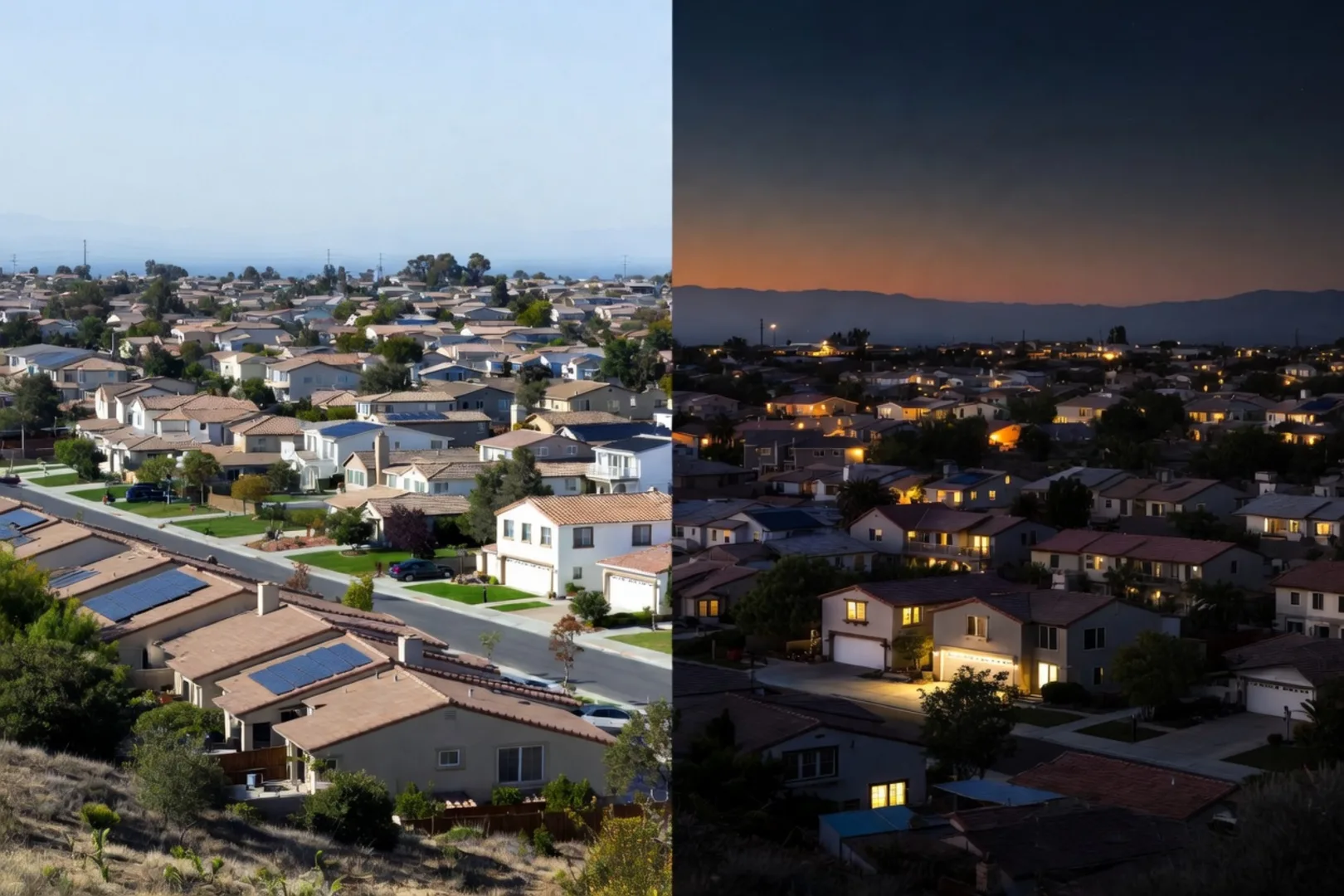
Expert Tip: Tour each neighborhood twice, once during the day, once at dusk.
Daytime tours show you the property. Dusk tours show you the neighborhood. The difference matters for a horse property because the rhythm of the place (when neighbors come home, how loud the freeway sounds at 8 pm, whether the streetlights wash out the stars) is what you actually live with. La Cresta at 8 pm sounds like crickets. Meadowview at 8 pm sounds like a community pool closing. Los Ranchitos at 8 pm sounds like nothing. Pick the silence you want.
What to do once you have a shortlist
The order of operations from "I have a shortlist" to "I closed" is short, and skipping steps costs deposits. Once you have narrowed your tour list to two or three neighborhoods, the pre-offer financing question becomes the gating step. Most coastal-California pre-approvals fail in underwriting on horse properties for predictable reasons (excess land, outbuilding contributory value, comparable scarcity, Mello-Roos surprises). Our horse property loans Temecula guide walks through which loan programs actually close on this property type and what to verify before you write.
For a current look at on-market inventory, browse Temecula homes for sale or the existing Banning Solera horse property listing as a turnkey example. Most serious buyers tour 4 to 7 properties across two neighborhoods before writing.
Frequently asked questions
Which Temecula neighborhood has the largest horse property lots?
De Luz, by a wide margin. Most De Luz parcels run 10 to 40+ acres, often combining horse pasture with working avocado or citrus orchards. La Cresta comes second, with 5-acre minimums and many parcels at 10 to 20+ acres. If your shopping criteria starts with "the most acreage," De Luz is the answer. If it starts with "the most acreage within the Santa Rosa Plateau equestrian community," La Cresta is the answer.
Which neighborhood is best for a first-time horse-property buyer?
Los Ranchitos and Meadowview are the most forgiving entry points. Both have established horse infrastructure, in-town convenience, and price tiers that start under $1M for the right parcel. La Cresta and De Luz are larger commitments and reward buyers who already know how they want to use the land. Wine Country sits between, with the added consideration of whether you want vineyard exposure or strictly pasture.
Are there horse-friendly neighborhoods in Temecula without an HOA?
Yes. Los Ranchitos, parts of Wine Country east of Butterfield, and many De Luz parcels carry no HOA dues at all. La Cresta and Meadowview do have property owner associations, though dues are modest by amenity-community standards (typically $240 quarterly for Meadowview, several hundred annually for La Cresta sub-associations). Oakridge Ranches and Glen Oaks have HOA-maintained trails, which most buyers consider an asset rather than a cost.
Why do you recommend skipping Wolf Creek and Sommers Bend if those listings sometimes mention "horse property potential"?
Because the zoning, the lot size, and the HOA CCRs do not actually permit horses, regardless of marketing copy. Wolf Creek and Sommers Bend are master-planned tract subdivisions on lots typically under a quarter-acre, with HOAs that forbid livestock and Mello-Roos special assessments that add $2,500 to $3,700 per year on top of base property tax. Buying expecting to add a barn later is how owners end up in code-enforcement disputes within the first year.
How much Mello-Roos do horse-property neighborhoods carry?
Most of the legitimate horse neighborhoods (La Cresta, Meadowview, Los Ranchitos, parts of Wine Country, De Luz) predate the post-1990 Community Facilities District era and carry no Mello-Roos. Oakridge Ranches and Glen Oaks vary by parcel. Always pull the actual property tax bill from the Riverside County Treasurer-Tax Collector portal (you only need the APN) before assuming. The full breakdown of how Mello-Roos varies between Temecula neighborhoods lives in our Mello-Roos guide.
Can I keep horses in any Temecula neighborhood if the lot is big enough?
No. Lot size matters, but it is not sufficient. The parcel must also be zoned to permit horse-keeping (typically Residential Rural or Residential Agricultural under Riverside County, or specific city zoning for in-Temecula parcels), and any HOA or CCR must permit livestock. A 1-acre parcel inside a tract HOA that forbids livestock cannot legally host a horse. Verify all three (zoning, HOA, CCR) before writing the offer.
Is La Cresta technically Temecula or Murrieta?
Neither, technically. La Cresta is unincorporated Riverside County. The mailing address is Murrieta, ZIP 92562, but the community is not part of the City of Murrieta proper, which means county zoning applies (not city). Schools are Murrieta Valley Unified. For practical purposes, locals call it "La Cresta" rather than identifying it with either city. The full La Cresta breakdown lives in our La Cresta horse property buyer's guide.
Key Takeaways
- Six neighborhoods work. La Cresta, Meadowview, Los Ranchitos, Wine Country, Oakridge Ranches / Glen Oaks, and De Luz are the realistic shortlist for a Temecula horse-property buyer.
- The right one depends on the buyer you are about to be. Generational holders pick La Cresta. Suburban-meets-equestrian picks Meadowview. Country-quiet-with-quick-errands picks Los Ranchitos. Vineyard-plus-pasture picks Wine Country. Working orchards pick De Luz.
- "Horse property potential" is marketing language. Wolf Creek, Sommers Bend, Murrieta Hot Springs newer tracts, Harveston, Roripaugh Ranch, and Paloma del Sol are good neighborhoods, but they are not horse neighborhoods. Verify zoning, HOA, and CCR before the offer.
- Mello-Roos varies far more by neighborhood than by city. Older horse neighborhoods often run zero Mello-Roos. Newer tract subdivisions that allow horses (rare) often run $2,500 to $4,500 annually.
- Tour each shortlist neighborhood twice. Once during the day, once at dusk. The neighborhood you live in is the one you experience at 8 pm, not at 1 pm.
Bottom line: which Temecula horse-property neighborhood should you actually buy in?
The honest answer is the one most buyers do not want to hear: it depends on which version of yourself you are about to become. La Cresta is the answer for the buyer who wants destination land and a generational hold. Meadowview is the answer for the buyer who wants horses without giving up the community pool and the 10-minute Costco run. Los Ranchitos is the answer for the buyer who wants country quiet with a 7-minute drive to a real grocery store. Wine Country is the answer for the buyer who wants a glass of viognier on the back porch and trails to ride to the next winery. Oakridge Ranches and Glen Oaks are the answer for the buyer who wants La Cresta-style amenities at a slightly lower entry cost. De Luz is the answer for the buyer who wants a working orchard plus pasture and is willing to drive the extra 15 minutes to retail.
Tour two or three of these before you commit. Pick the one where the silence sounds the way you want your silence to sound.
Ready to run the financing math on a specific property in one of these neighborhoods? Get a side-by-side lender comparison with the actual property tax bill, the actual outbuilding inventory, and the right loan program for a 2 to 20 acre rural-residential purchase in Riverside County. The pre-approval that closed your friend's tract home in Mission Viejo is not the pre-approval that will close on your horse property.
For the full Temecula horse-property landscape (zoning math, loan programs, the pre-offer checklist, and active inventory filtered to horse-friendly acreage), see our Temecula horse properties guide.