Mortgage Broker vs Retail Loan Officer in Temecula
A retail loan officer works for one lender and sells that lender's products. A broker shops one application across many. Neither wins in the abstract, they fail in different directions: a decline at a retail desk is usually the end of that road, while a broker can move the file. Jumbo, acreage, self-employment, and a recent job change all tilt toward the broker.
Part of a guide
This is a deep dive from free help finding a Temecula loan officer, which covers the whole picture including what the service costs and when to skip it entirely.
A retail loan officer works for one lender and sells that lender's products. A broker holds relationships with many wholesale lenders and shops your file among them. That is the entire distinction, and almost nobody explains it before you are already three documents deep into an application.
Neither is better in the abstract. They fail in different directions, and the direction that matters is the one your particular file is likely to run into.
The short version
- Broker: many lenders, one application, better odds on an unusual file.
- Retail: one shelf, often in-house underwriting, can be faster and simpler.
- A decline at a retail desk is usually the end of that road. A broker can move the file.
- Jumbo, acreage, self-employment, and recent job changes favor a broker.
- Ask "who underwrites this?" and you will know which one you are talking to.
The structural difference
Picture a shop. The retail loan officer works behind one counter and sells what that store stocks. If the store carries a good version of what you need, you are well served, and you get the benefit of everyone in the building working for the same company, which tends to make the process tidier.
The broker stands in a hallway with doors to many stores. They take your file, decide which doors are worth knocking on, and bring back what is behind them. One application, several possible lenders. The tradeoff is that the underwriting happens somewhere the broker does not control, which can add a step when there is a question.

Both are licensed, both carry an NMLS number you can verify, and both are compensated out of the loan when it funds. The difference is not honesty or professionalism. It is inventory.
Side by side
| Broker | Retail loan officer | |
|---|---|---|
| Product menu | Many wholesale lenders | One lender's shelf |
| Underwriting | At the wholesale lender | Often in house |
| If the file is declined | Can move it to another lender | Usually the end of that road |
| Unusual income | Bank statement and alternative documentation options | Limited to that lender's programs |
| Existing-customer perks | Rare | Possible at a bank you already use |
| Process control | Coordinates across companies | Everyone under one roof |
Which one your scenario wants
The honest answer is that most straightforward files close fine either way, and the choice only becomes consequential when something about your situation is not standard. In the Temecula market, a few situations come up often enough to be worth naming.
| Your situation | Leans | Because |
|---|---|---|
| Salaried, good credit, tract home | Either | Clean files are welcome everywhere. Pick on service |
| Above the conforming limit | Broker | Jumbo pricing and overlays vary widely between lenders |
| Self-employed or commission-paid | Broker | Alternative documentation programs live on the wholesale side |
| Acreage in De Luz or La Cresta | Broker | Some lenders simply will not lend on it. Options matter |
| VA purchase | Either, with repetition | Volume in VA specifically matters more than the channel |
| You bank somewhere with relationship pricing | Retail, worth a quote | Existing-customer terms can be genuinely good |
How to tell which one you are talking to
People do not always announce it, and the job titles blur. Three questions settle it quickly.
"Who underwrites this loan?"
The cleanest tell. A retail officer names their own company. A broker names a wholesale lender, or says it depends on where the file is placed. That single answer also tells you where decisions get made and how many hands the file passes through.
"If this lender says no, what happens?"
A broker will describe moving the file. A retail officer will usually describe restructuring the file, or will be candid that it is the end of the line there. Both answers are fine. The point is knowing which one you are buying before you need it.
"How many lenders can you place this with?"
Blunt, but it works. "One" is a perfectly good answer if that one is a strong fit for your file. What you want to avoid is discovering the answer in week three when something has gone sideways.
The decline problem

This is the difference that costs real money, and it is invisible until it happens. Suppose your file goes to underwriting and comes back declined, or approved with a condition you cannot meet. At a retail desk, the options are to restructure the file within that lender's rules or to start over somewhere else, which means a new application and, in a purchase, time you may not have.
A broker can lift the file and place it elsewhere without starting from zero. Whether that matters depends entirely on whether your file has anything a lender could object to. For a salaried buyer with clean credit buying a tract home, it is close to irrelevant. For a self-employed buyer purchasing acreage, it is close to the whole decision.
The trap is that people choose the channel at the start, when the file looks simple, and discover the consequence later, when it does not.
How each one fails
Comparing strengths is the easy version of this question. The useful version is comparing failure modes, because you will meet one of them eventually and it is better to know which one you signed up for.
| Failure mode | Broker | Retail loan officer |
|---|---|---|
| Communication gap | File sits at a lender the broker does not control, so answers can lag | Rarer, since everyone is in the same building |
| Wrong product chosen | Too many options, placed with the easiest rather than the best | Only one shelf, so a poor fit gets sold anyway |
| Late-stage decline | Recoverable by moving the file | Often means restarting elsewhere |
| Pricing drift | Quoted from one lender, placed with another | Locked to one lender's sheet, better or worse |
| Volume crunch | Small shop, one person, no backup when busy | Large shop, you may become a file number |
Read that table as a list of questions to ask rather than a verdict. "What happens if the lender you place me with slows down?" is a fair thing to put to a broker, and "what happens if your underwriting says no?" is a fair thing to put to a retail officer. Both have good answers available. You want to hear whether this particular person has one.
What does not distinguish them
A few things get treated as broker-versus-retail differences and are not. Both are paid out of the loan rather than by you at the introduction. Both must be licensed, and you can verify either through NMLS Consumer Access in about a minute. Both can be excellent or mediocre, because the individual matters far more than the channel. A conscientious retail officer beats a careless broker every day of the week.
Rate is not a channel difference either, at least not reliably. Brokers often win on pricing because they shop, but a bank protecting a relationship can sharpen its pencil in a way no wholesale lender will. Anyone who tells you one channel is always cheaper is describing a tendency as a law.
The Temecula version of this question
National guidance on brokers and banks tends to assume a generic suburb, and this valley is not quite that. Three local realities push the answer around.
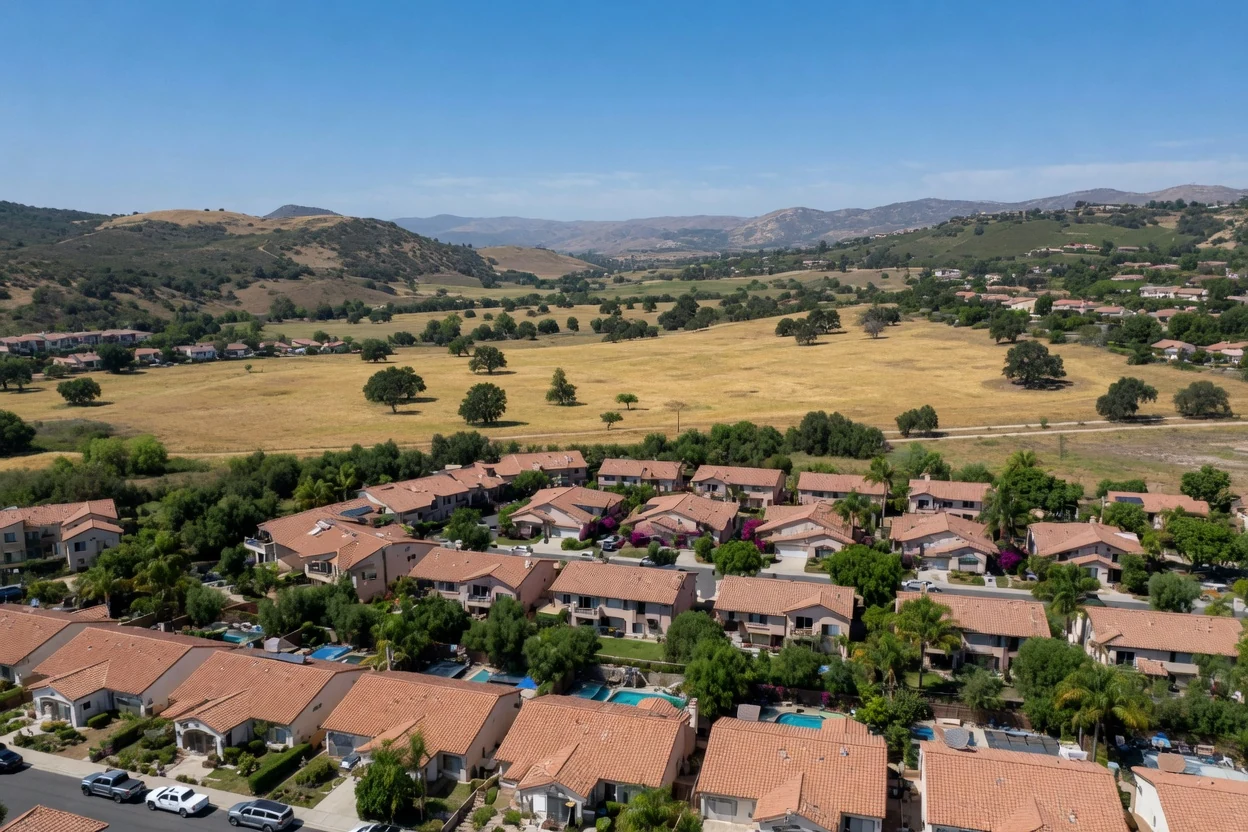
The first is the range of property. Within twenty minutes you can go from a condo in a managed community to a tract home inside a community facilities district to forty acres with a well and a barn. That spread is unusually wide for one market, and it means the "unusual file" scenario that favors a broker is not an edge case here. It is Tuesday. A buyer who assumes their file is standard because the last three houses they looked at were standard can get surprised by the fourth.
The second is who lives here. A meaningful share of this market commutes over the county line or works for themselves, and both of those are documentation stories rather than problems. Salaried buyers with one employer and five years of history have the easiest time anywhere. Everyone else benefits from someone with more than one lender to ask.
The third is that both channels are genuinely well represented locally. There are established brokerages here alongside branches of national lenders, which means you can get quotes from both without leaving the valley or settling for a call center three time zones away. That is a better position than buyers in smaller markets have, and it makes running one quote from each channel a reasonable use of an afternoon rather than a research project.
None of this makes one channel correct. It means the question is worth actually asking here, rather than defaulting to whoever your agent mentioned first.
Frequently asked questions
Is a broker more expensive because there is a middleman?
No. Broker compensation comes out of the loan the same way a retail officer's does. The "extra layer" intuition is reasonable and wrong. Compare Loan Estimates rather than reasoning from structure.
Can I use both and compare?
Yes, and it is a sensible thing to do. Gather the quotes close together, because rates move daily and two quotes a week apart are not a comparison.
Does a broker pull my credit multiple times?
One pull is normally enough to shop your file. If someone proposes several, ask why before agreeing.
Do brokers handle VA and USDA?
Many do. For both programs, what matters more than the channel is how often that specific officer closes them. Ask for a number.
Which do Temecula buyers use more?
Both are well represented here, with local brokerages alongside branches of national lenders. That is a genuinely useful position to be in as a buyer, because you can get quotes from both channels without leaving the valley.
Takeaways
- The distinction is inventory: many lenders versus one shelf.
- It barely matters on a clean file and matters enormously on an unusual one.
- "Who underwrites this?" identifies the channel in one question.
- The decline scenario is where the difference turns into money and time.
- The individual officer matters more than the channel they work in.
If you are not sure which channel your file wants, that is exactly the routing question free help finding a Temecula loan officer is built to answer, using your property type and loan type rather than a coin toss.
Sources: NMLS Consumer Access