Land Loan vs. Construction Loan
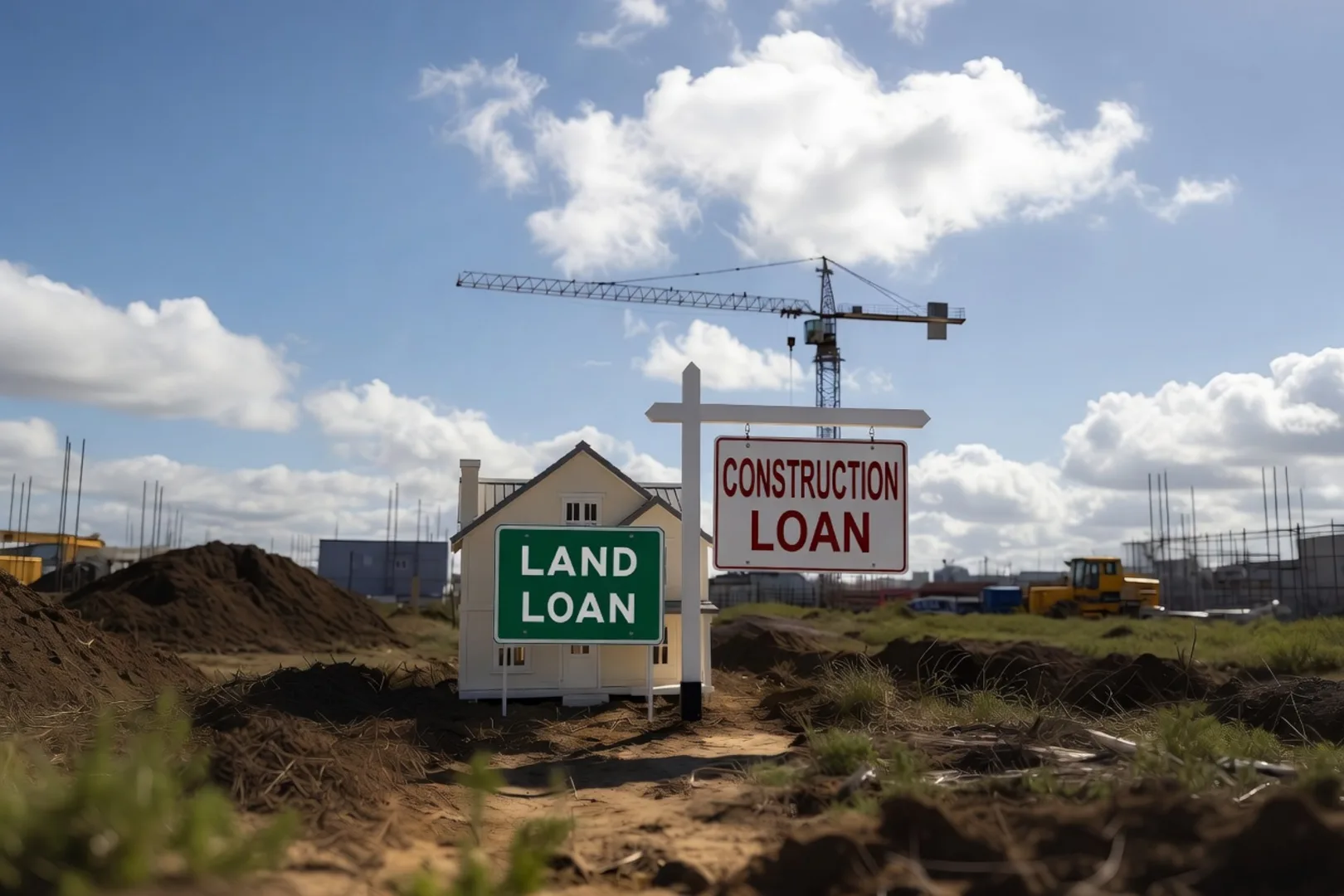
Two loans, two timelines, two very different appetites for risk. A land loan buys the dirt beneath your future home. A construction loan pays the crew swinging hammers on it. They often share the same project, but almost never share the same underwriter's file, and confusing the two is the fastest way to stall a Temecula build before the concrete ever cures.
Most Temecula custom builds touch both files: a land loan to buy the dirt, then a construction loan to pay the crew that turns it into a house. The two products read alike from the curb and very differently from inside the underwriter's office.
The Part Most Buyers Miss
Most Temecula custom builds are not financed once. They are financed three times. A land loan closes first. A construction loan then pays off the land loan when shovels hit dirt. A permanent mortgage finally pays off the construction loan once the certificate of occupancy is signed. A construction-to-permanent (C2P) product collapses the last two into a single close, saving a full round of fees, appraisal, and rate risk.
Land Loans: Financing the Dirt
A land loan is a short-to-medium term note secured by raw, unimproved, or improved parcels. Rates typically run 1 to 2 percentage points above a conforming purchase mortgage, down payments start around 20 percent for improved lots and climb toward 50 percent on raw acreage, and terms rarely stretch past 20 years. Lenders price the premium in because there is no structure to foreclose on if the borrower walks. It is all dirt, and dirt in a rural corner of Riverside County moves slowly in a default sale. Expect fewer lenders, stricter credit requirements (scores of 720 and up are common), and a much closer look at your intended use for the parcel before anyone quotes you a rate.
Construction Loans: Financing the Build
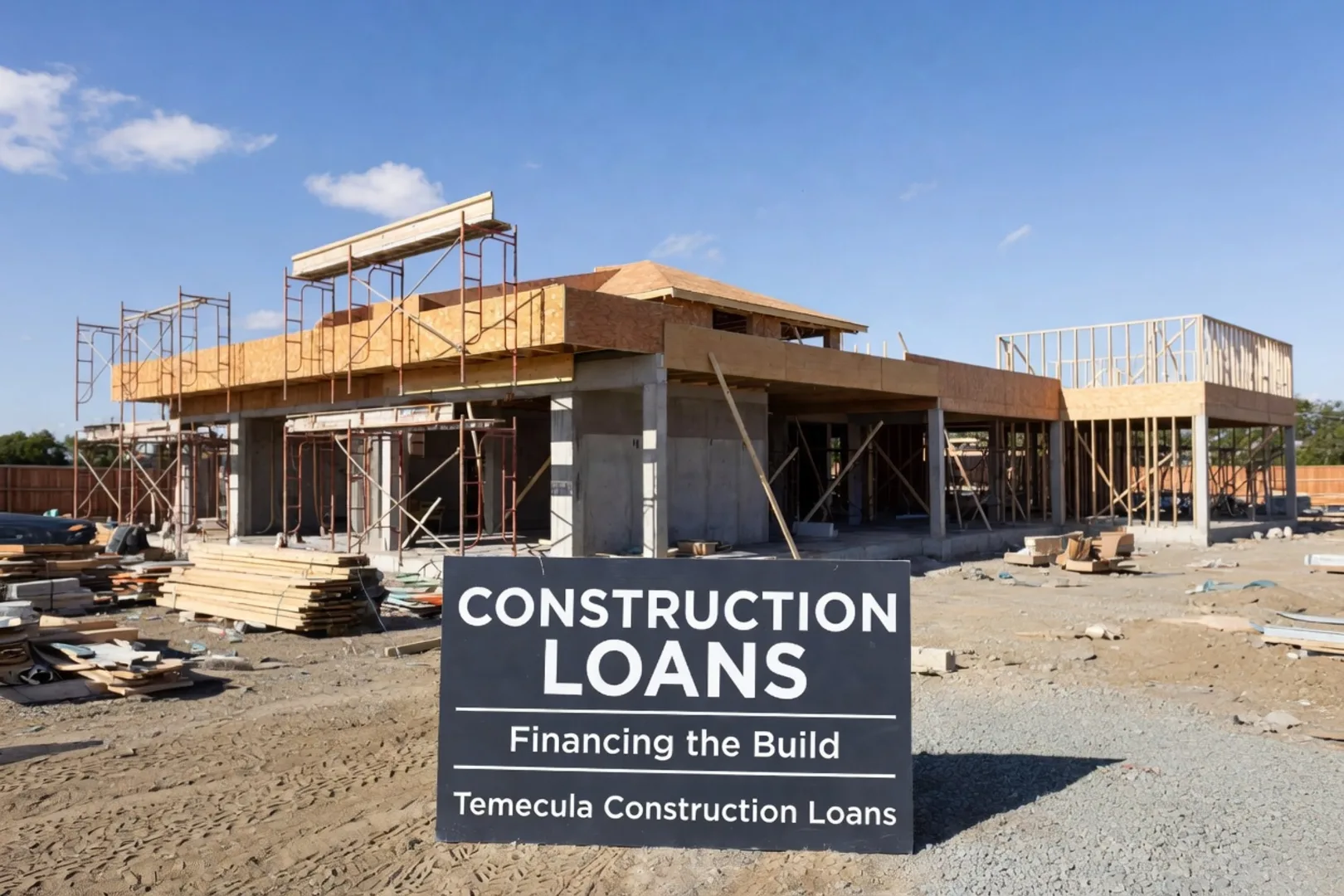
A construction loan is short-term and draw-based. The lender releases funds in stages (foundation, framing, rough-in, drywall, final) after an inspector signs off on each milestone. Payments during the build are typically interest-only on the funds drawn so far, and the whole note usually matures inside 12 to 24 months. At that point you either refinance into a permanent mortgage or, if you took out a construction-to-permanent loan at the outset, the note auto-converts without a second closing, a second appraisal, or a second stack of fees. The single-close structure is the cleaner path for most Temecula custom builds, but it also demands county-approved plans, a licensed general contractor, and a firm budget before you break ground.
This is the loan that pays in pieces. Foundation pours first, then framing, then rough-in, then drywall, then final, and the lender writes the next check only after the inspector signs the last one. Run out of milestones and the clock starts on the conversion.
The Temecula Angle
Geography matters. A flat, utility-stubbed lot in French Valley is a very different underwriting story than a twelve-acre piece of De Luz hillside that still needs a well, a septic perc test, and a private road easement. Lenders price that difference aggressively, and the gap between the two can run several percentage points on the land loan alone. Expect the appraiser to flag any steep grade, any missing utility stub, and any access that relies on a private or shared road. Before you shop for financing, run the parcel through the six-layer land investigation so you know which story you are actually telling the underwriter, and so you can stage your lender conversations around a parcel the bank will actually lend on.
Side-by-side Comparison
| Feature | Land Loan | Construction Loan |
|---|---|---|
| Purpose | Purchase the parcel | Fund vertical construction |
| Typical term | 10 to 20 years | 12 to 24 months |
| Down payment | 20% to 50% | 20% to 25% |
| Rate premium vs. conforming | +1 to 2 points | +0.5 to 1 point, often variable |
| Interest structure | Fixed or adjustable, amortizing | Interest-only on drawn balance |
| Payout | Lump sum at closing | Draws tied to construction milestones |
| Collateral | The dirt | Dirt plus improvements in progress |
| Rolls into permanent mortgage? | No, requires a separate refinance | Yes, if structured as C2P |
Common questions from Temecula buyers
- Can I skip the land loan and go straight to a construction loan?
- Yes, if your lender offers a single-close construction loan that rolls lot purchase, construction, and permanent financing into one note. You will need the APN, a buildable site plan, a licensed general contractor, and county-approved plans before closing. Most of the inland credit unions and regional banks around Temecula will do this on primary-residence builds under the conforming limit.
- Do the rates lock for both pieces at once?
- Only on a construction-to-permanent loan. On a standalone land loan, you lock at the land closing, then the construction loan rate locks again when that loan closes months later. That gap is where most custom-build budgets quietly erode in a rising-rate market.
- Do the VA or FHA help here?
- The VA allows a zero-down construction-to-permanent loan for qualifying veterans, though participating lenders in Riverside County are scarce. FHA offers a 203(k) for rehab and a separate one-time-close C2P for ground-up builds, both of which require an FHA-approved builder and a minimum 3.5% down. Conventional portfolio products are still the most common path for Temecula custom homes.
Sources: Consumer Financial Protection Bureau on construction loans, Investopedia on land loan structure, VA construction loan program, HUD 203(k) rehabilitation loan.
Key Features
- Loan phase comparison
- Lender overlap
- Draw schedules
- Rate lock strategy
- Lot loan requirements
Look Up Your Land Parcel
Search by APN or address to pull zoning, flood zone, and tax details for any Riverside County parcel.
Land Lookup Tool